LSI Keywords Explained: Myth vs Modern Semantic SEO
Why “LSI keywords” still comes up—and what I’ll help you do instead

I’ve seen content briefs that demand 30 specific “LSI keywords” stuffed into a 900-word post. The writer struggles to shoehorn them in, the sentences become clunky, and the final piece reads like it was written by a robot for a robot. The worst part? It usually doesn’t even rank.
If you have felt that frustration, you aren’t alone. The term “LSI keywords” is one of the most persistent myths in our industry. Beginners are often told it’s a secret ranking lever, while Google engineers roll their eyes.
Here is the reality I operate on: Google absolutely cares about context, synonyms, and related topics—but they don’t use LSI to do it. In this guide, I’ll walk you through exactly what LSI was historically, why it doesn’t work for modern search, and the semantic SEO framework I use today to build authority without keyword stuffing.
Quick answer: What are LSI keywords (and do they matter for Google rankings today)?

Strictly speaking, LSI (Latent Semantic Indexing) is a mathematical method developed in the late 1980s to identify relationships between words in a set of static documents. It was designed for small databases, not the entire World Wide Web.
In the SEO world, people use the term “LSI keywords” as shorthand for “semantically related words.” For example, if you write about “Apple,” related terms might be “iPhone,” “MacBook,” or “Cupertino.”
However, LSI keywords are not a Google ranking factor. Google’s representatives have explicitly stated this. Using an old LSI tool to check off a list of synonyms won’t magically boost your rankings. Modern relevance is about meaning and intent, not word matching.
Quick takeaway (for beginners)
- Myth: You must include a specific list of “LSI keywords” to rank.
- Reality: Google uses advanced AI (like BERT and RankBrain) to understand concepts, not just keyword frequency.
- Action: Focus on covering the topic deeply and using natural language that answers the user’s questions.
- Risk: Stuffing “related terms” where they don’t belong hurts readability and user trust.
Where the idea came from: Latent Semantic Indexing vs the SEO “LSI keywords” myth

To understand why this term won’t die, we have to look at where it started. Years ago, I used to think LSI was the “secret sauce” to semantic relevance too. It seemed logical: computers need math to understand language, and LSI is math. But when you dig into the technology, the disconnect becomes obvious.
For businesses, this matters because chasing the wrong metric leads to bad content. If your team is optimizing for an algorithm from 1989, you are missing the opportunities provided by the AI-driven search engines of 2025.
What LSI actually was (1980s document analysis)
Latent Semantic Indexing was created to solve a specific problem in information retrieval: synonymy (different words meaning the same thing) and polysemy (one word having multiple meanings). It analyzes a fixed collection of text—like a library database—to find patterns in how words occur together.
Think of it like grouping books by shared themes based on the words on their pages. It requires a static database and heavy processing power to re-calculate every time a new document is added. That makes it fundamentally incompatible with the web, which changes every second.
Why SEO kept calling related terms “LSI keywords”
So why do we still say it? Convenience. When Google started moving away from exact-match keywords (around the Hummingbird update in 2013), SEOs noticed that pages with richer vocabularies ranked better. We needed a name for those “supporting words.”
Keyword tool vendors jumped on the term “LSI” because it sounded scientific. It gave users a checklist: “Add these 10 words to get a higher score.” It was comforting, but it misled a generation of marketers into thinking relevance was a math game rather than a communication challenge.
Google’s stance: why “LSI keywords” aren’t a ranking signal
Google has been unusually transparent on this specific topic. John Mueller, Google’s Search Advocate, famously tweeted in 2019: “There’s no such thing as LSI keywords — anyone telling you otherwise is mistaken.”
Google has moved lightyears beyond counting word co-occurrences. They now use semantic understanding through models like BERT, MUM, and neural embeddings. These systems understand that “cheap” and “affordable” are related not just because they appear together, but because they share an underlying intent.
What actually drives relevance today: semantic SEO, entities, and intent (not LSI keywords)

If we aren’t using LSI, what are we doing? The answer is Semantic SEO. When I optimize for semantics, I’m trying to make my page unambiguous to a machine and incredibly useful to a human. This approach relies on Entities—distinct concepts like people, places, or things—rather than just strings of text.
For example, if I’m optimizing a page for a plumbing business, I’m not just looking for synonyms for “plumber.” I’m looking to cover the entities that define the service: “emergency repair,” “leak detection,” “licensed contractors,” and “water heaters.”
Semantic SEO in plain English: what search engines try to understand
Search engines try to mimic human comprehension. They want to know:
- Context: Does the word “jaguar” refer to the animal, the car, or the football team? The surrounding words (speed, jungle, engine, stadium) clarify this.
- Relationships: How do concepts connect? A “CEO” leads a “Company.” A “Recipe” requires “Ingredients.”
- Intent: Is the user looking to buy, learn, or go somewhere?
Entities: the easiest way to think about ‘related terms’ without the LSI baggage
An entity is a known “thing.” Google maintains a Knowledge Graph of billions of these entities. To rank well, your content needs to confirm to Google that you are talking about the right entities.
If you are writing a B2B SaaS onboarding guide, your entity map might include “user permissions,” “API integration,” “SSO,” and “customer success.” You aren’t adding these because a tool said they are LSI keywords; you are adding them because you cannot write a comprehensive guide without them.
Table: ‘LSI keywords’ approach vs semantic SEO approach (what I recommend)
| Feature | Old “LSI Keyword” Approach | Modern Semantic SEO Approach |
|---|---|---|
| Primary Aim | Trick the algorithm by increasing word frequency. | Help the user by covering the topic completely. |
| How you write | “I need to fit ‘best laptop’ into this paragraph 3 times.” | “I need to explain battery life and screen resolution clearly.” |
| Inputs | Lists of synonyms from a keyword tool. | Entities, customer questions, and expert knowledge. |
| Risk | Keyword stuffing penalties; unreadable content. | None, provided the content remains focused. |
| Success Metric | Getting a “100/100” score on an SEO tool. | Organic traffic, time on page, and leads/conversions. |
My step-by-step workflow to use related terms naturally (without keyword stuffing)

Theory is great, but you need to ship content. Here is the actual workflow I use to build semantically rich briefs and articles. This process ensures we hit the right topics without sounding robotic.
Note: If you are managing high volumes of content, you might use an AI article generator to speed up the initial drafting phase. However, I always use the following steps to verify the output ensures semantic depth.
Step 1: Identify intent + what a ‘good answer’ looks like for this query
Before looking for keywords, look at the SERP (Search Engine Results Page). What is ranking?
- Informational: Guides, “What is” articles. (User wants to learn).
- Commercial: “Best X,” Reviews, Comparisons. (User is weighing options).
- Transactional: Product pages, pricing. (User is ready to buy).
My rule of thumb: If the top results are mostly educational guides, I don’t lead with a sales pitch or pricing. I align my structure to the user’s learning journey.
Step 2: Build a ‘semantic map’ from SERPs, customers, and competitors
I don’t rely on a single tool. I build a “map” of concepts from three places:
- Google’s “People Also Ask”: These are direct user questions.
- Competitor Headings: Scan the H2s and H3s of the top 3 results. What sub-topics do they all cover?
- Customer Language: If I have access to sales calls or support tickets, I use the exact phrases customers use to describe their problems.
In 20 minutes, I can usually pull enough coverage signals from these sources to outline a comprehensive piece.
Step 3: Turn the map into headings that answer real questions
Don’t just sprinkle these terms in paragraphs. Turn them into structure. If your semantic research shows terms like “cost,” “installation,” and “maintenance,” those should likely be H2s or H3s.
Micro-example:
Bad structure: Just a wall of text containing the word “maintenance.”.
Good structure: H2: How much does maintenance cost annually?
If I can’t explain why a heading helps the user, I cut it. No fluff allowed.
Step 4: Draft for clarity first, then optimize on-page elements
Write the draft focusing on being helpful. Once the draft is done, I do an “SEO polish” pass:
- Title Tag: Includes primary keyword + hook.
- Intro: States the problem and solution immediately.
- Internal Links: Connect to related entities (e.g., linking “CRM” to your “CRM integration” page).
- Alt Text: Describe images naturally using entity names, not keyword lists.
I read the content out loud once to catch awkward phrasing. If I stumble over a sentence because I forced a keyword in, I rewrite it.
Table: Semantic SEO workflow checklist (step → output → quality check)
| Step | Output | Quality Check |
|---|---|---|
| 1. Intent Analysis | Target Intent Statement (Info/Comm/Trans) | Does this match the top 3 ranking URLs? |
| 2. Entity Research | List of 5-10 core topics/entities | Are these relevant to the user, or just random synonyms? |
| 3. Outlining | H2/H3 Structure | Does every heading answer a specific user question? |
| 4. Drafting | First Draft | Is the language natural? Did I avoid stuffing? |
| 5. Technical Polish | Meta tags, Schema, Alt text | Is the structure easy for a machine to parse? |
How AI-driven search changes content strategy: AI Overviews, embeddings, and multimodal SEO

The rise of AI Overviews (formerly SGE) and Generative Engine Optimization (GEO) has changed the game. It’s no longer just about 10 blue links. In 2025, AI Overviews appear in over 50% of Google search results .
AI models rely heavily on vector embeddings—a way of mapping words to numbers where similar concepts are close together in mathematical space. To win here, your content must be structured so it can be easily “read” and summarized by an AI. This is where tools like a specialized SEO content generator or AI content writer can assist in creating structured data outputs, but the strategy must be human-led.
What AI Overviews reward: structure, clarity, and complete answers
I don’t try to “game” AI Overviews. Instead, I try to make my content the easiest source for the AI to cite. Here is how:
- Explicit Definitions: Start sections with direct answers. “LSI keywords are…”
- Lists and Tables: AI loves structured data. Use bullets for steps and tables for comparisons.
- Logical Headings: Ensure your H2s clearly describe the content below them.
When I format a section, I ask: Could someone skim this and still get the point in 10 seconds? If yes, an AI can probably summarize it accurately too.
Multimedia semantic SEO: captions, transcripts, alt text, and metadata
With approximately 55% of searches now involving voice or visual components , text isn’t enough. Semantic SEO extends to video and audio.
- Transcripts: Always include a full transcript for videos. It gives search engines text to crawl.
- Captions: Burned-in captions help user engagement, but SRT files help indexation.
- Alt Text: Be descriptive. Bad: “SEO chart.” Good: “Bar chart showing 32% increase in views for semantically optimized videos.”
You don’t need a Hollywood studio. Even a 60-second explainer clip with a clean transcript can rank and get summarized by AI.
Common mistakes people make with LSI keywords (and how I fix them)

I’ve made plenty of mistakes in my career, including over-optimizing content until it was unreadable. Here are the most common traps I see teams fall into, and the quick fixes for each.
Mistake → Fix list (5–8 items)
- Mistake: Treating synonyms as “LSI keywords” and forcing them in.
Fix: Use synonyms only when they improve flow. Focus on entities (topics), not just different words for the same thing. - Mistake: ignoring search intent because a keyword has high volume.
Fix: Always check the SERP. If users want a calculator and you write a 2,000-word history essay, you won’t rank. - Mistake: Obsessing over tool scores (e.g., “Content Grade: A+”).
Fix: Use scores as a rough guide for coverage, but prioritize human readability. If the tool says add “cheap,” but you sell luxury goods, ignore the tool. - Mistake: Forgetting about internal linking.
Fix: Build semantic clusters. Link your “LSI” page to your “SEO Strategy” page. This tells Google how the topics connect. - Mistake: Measuring the wrong things (keyword density).
Fix: Track meaningful business metrics: organic traffic growth, ranking for long-tail queries, and conversions/leads.
FAQs about LSI keywords + my next-step checklist

FAQ: What are LSI keywords?
“LSI keywords” is a term the SEO industry uses to describe semantically related words or synonyms. However, the actual technology (Latent Semantic Indexing) is an outdated document analysis method that Google does not use for ranking.
FAQ: Do LSI keywords affect Google rankings today?
Not directly. Google does not check if you have a specific list of LSI terms. However, using naturally related vocabulary helps Google understand your topic’s context, which does help rankings.
FAQ: What should I do instead of targeting LSI keywords?
Practice Semantic SEO. Cover your main topic comprehensively, answer user questions, use structured data (schema), and ensure you are discussing the relevant entities (people, places, concepts) associated with your subject.
FAQ: How does AI-driven search impact content strategy?
AI-driven search (like AI Overviews) prioritizes authoritative, well-structured answers. Content that is easy to summarize—using clear definitions, lists, and direct answers—tends to perform better than rambling text blocks.
FAQ: How can multimedia benefit SEO in this semantic context?
Videos and images provide more context signals to search engines, especially when paired with transcripts and alt text. They allow you to capture traffic from image and video search, not just text results.
3-bullet recap + next actions (3–5 steps)
Recap:
- LSI is a myth; Google uses modern semantic AI (BERT/MUM).
- Relevance comes from depth, intent matching, and entity coverage, not keyword matching.
- Structure matters more than ever for AI-driven search visibility.
Next Actions:
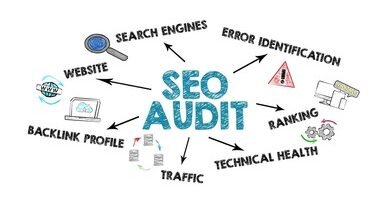
- Audit one page: Pick a key service or blog page that is underperforming.
- Check the “Entity Gaps”: Compare your headings to the top 3 competitors. What sub-topics did they cover that you missed?
- Rewrite for Structure: Break long paragraphs into lists or add a “Quick Answer” definition at the top.
- Add Schema/FAQ: Give search engines explicit context about your content type.
If you only do one thing this week, stop stressing about “LSI ratios” and start asking: Does this page answer the user’s question better than the current #1 result? That is the only metric that truly endures.