Step-by-Step Keyword Gap Analysis: A Practical Guide for Beginners
Introduction: I use keyword gap analysis to find competitors’ proven traffic opportunities (without guessing)

I’ve stared at a content calendar more times than I care to admit, realizing I was just guessing what to write next. Early in my career, I spent hours brainstorming clever topics, only to watch competitors dominate the SERPs with boring, practical answers I hadn’t thought to cover. That changed when I stopped brainstorming and started comparing data.
If you are an in-house operator or a marketing manager at a growing business, you don’t need more ideas; you need a system. In this guide, I will walk you through the exact keyword gap analysis workflow I use to find high-impact topics. We will cover how to identify real competitors, collect data using free tools, filter out the noise, and prioritize a content plan that actually drives business results—even in an era of AI-driven search.
What a keyword gap analysis is (and why it matters more in 2026’s zero-click search world)

Quick Answer: A keyword gap analysis is the process of comparing the keywords your competitors rank for against the keywords your site ranks for. The goal is to identify specific search terms where they are getting traffic and you are invisible.
This analysis moves you from reactive content creation to a strategic offense. By identifying gaps, I can validate demand before I write a single word. If a competitor is ranking for a term, I know people are searching for it, and I know Google finds it relevant to my niche.
However, the stakes are higher now. With the rise of AI Overviews and answer engines, organic click-through rates (CTR) are shifting. In fact, some data suggests organic clicks have dropped significantly as users get answers directly on the SERP . This means I can no longer afford to target low-value vanity keywords. I need to find gaps where I can provide the best answer—structured for both humans and AI agents.
I run a gap analysis when:
- I’m taking over a new site or client.
- Traffic has plateaued despite consistent publishing.
- We are launching a new product line and need to build authority fast.
Before I start: set up a clean keyword gap analysis (sites, goals, and the data I actually need)

The biggest mistake I made when I first started was comparing my small B2B blog to industry giants like Forbes or HubSpot. That’s a fast way to get a spreadsheet full of keywords you can’t rank for. To get usable data, I have to pick the right fight.
My Pre-Analysis Checklist:
- Scope: Am I analyzing the whole domain or just a specific product category?
- Competitors: A list of 3–5 domains that actually rank for the customers I want (not just big publications).
- Data Sources: Access to Google Search Console (GSC), a spreadsheet, and a tool for volume data (Google Keyword Planner is fine).
Decide my “conversion goal” first (so I don’t chase vanity keywords)
Before I open a spreadsheet, I define what “winning” looks like. High traffic with zero conversions is a vanity metric that doesn’t help my quarterly review. I map my goals to the funnel:
- Goal: Brand Awareness. Target Informational intent (e.g., “what is SEO”). These are Top of Funnel (TOFU).
- Goal: Leads/Demos. Target Comparison intent (e.g., “SEO agency vs in-house”). These are Middle of Funnel (MOFU).
- Goal: Direct Sales. Target Transactional intent (e.g., “hire SEO consultant Atlanta”). These are Bottom of Funnel (BOFU).
Pick the right competitors: I use the SERP, not my assumptions
My business competitors aren’t always my SEO competitors. My business rival might have a terrible website, while a small niche blog might be eating up all the search traffic.
How I find true SEO competitors:
- I open an Incognito window.
- I search for 3–5 of my core topics (e.g., “keyword research tools,” “SEO strategy guide”).
- I ignore the ads and scan the top 5 organic results.
- I note the recurring domains. If “NicheMarketingBlog.com” appears three times, they are my SEO competitor.
Step-by-step keyword gap analysis workflow (free tools + spreadsheet method)

This is the core workflow. You can do this in about 60 to 120 minutes for a single topic cluster. I prefer this manual method over one-click tool exports because it forces me to look at the actual search results, which improves my content strategy significantly.
The Workflow at a Glance:
Data Collection → Normalization → Filtering → Validation
Step 1 — Export what I already rank for (Google Search Console)
First, I need to know my baseline. I go to Google Search Console > Performance > Search results.
I set the date range to the last 3 months to get a decent sample size. Then, I hit Export (Google Sheets or CSV). Here is the catch: I don’t just look at clicks. I filter the sheet to keep rows with high Impressions but low clicks. These are often my “striking distance” keywords—gaps on my own site where I’m ranking on page 2 or 3 but failing to satisfy the user.
Step 2 — Gather competitor keywords without paid tools (SERP + Keyword Planner shortcuts)
Since I’m not scraping protected data, I use observation. I visit the competitor pages I identified in the setup phase. I look at their:
- Page Title & H1: This usually contains their primary keyword.
- Subheadings (H2s): These often reveal secondary keywords and long-tail variations.
I list these topics out. Then, I plug them into Google Keyword Planner (under “Discover new keywords”) to get search volume ranges. I also keep an eye on the “People also ask” boxes in the SERPs—these are gold mines for question-based keywords that competitors might be answering poorly.
Step 3 — Combine everything into one spreadsheet (my keyword gap analysis template)
Now, it gets a little messy. I combine my GSC data and the competitor keyword list into one master sheet. I typically spend about 10 minutes cleaning this up—removing duplicates, fixing capitalization, and deleting irrelevant terms (like competitors’ brand names).
My Master Sheet Columns:
| Column Name | Description |
|---|---|
| Keyword | The search query. |
| Intent | Info, Trans, Nav, or Comm. |
| Volume | Monthly search volume (or range). |
| My URL | The URL I have ranking (leave blank if gap). |
| Comp URL | The competitor’s ranking URL. |
| Difficulty | High/Med/Low (proxy based on SERP). |
| ICE Score | Prioritization metric (1-10). |
Step 4 — Filter and validate: the 3 filters I apply before I get excited
A spreadsheet with 500 rows is paralyzing. I apply three filters to cut 80% of the list immediately. I ask myself these questions:
- Intent Fit: “Does this searcher actually want what I offer?” (If they are searching for “free pdf template” and I sell expensive software, I delete it.)
- Opportunity: “Is there enough volume to matter?” (I check impressions/volume).
- Feasibility: “Can I actually beat the current results?” (If the top 10 are government sites or Wikipedia, I mark it as ‘High Difficulty’ and move on.)
Turn gaps into an action plan: I prioritize keywords with ICE scoring + clustering

Once I have a filtered list of gaps, I need to know what to tackle first. I use the ICE framework (Impact, Confidence, Ease) to turn a raw list into a 30-60-90 day plan. This helps me explain to stakeholders why we are writing Article A instead of Article B.
Cluster first, then score (so I don’t create 20 pages for one intent)
I often see lists with “keyword research tools,” “best keyword tools,” and “top tools for keyword research” listed as three separate rows. These are the same intent. I group these into a Cluster. I pick one primary keyword (usually the highest volume) and list the others as secondary terms. One page will target all of them.
My ICE scoring rubric (beginner-friendly)
I assign a score from 1–10 for each variable. It doesn’t have to be perfect; it just needs to be relative.
- Impact (1–10): How much business value will this drive? (10 = Direct lead generation, 1 = Low-traffic vanity).
- Confidence (1–10): How sure am I that we can rank? (10 = We already have authority here, 1 = We are unknown in this niche).
- Ease (1–10): How hard is it to create? (10 = I can write this in 2 hours, 1 = Requires custom dev/video/original research).
| Keyword | Impact | Confidence | Ease | Total ICE | Action |
|---|---|---|---|---|---|
| CRM for small business | 10 | 4 | 5 | 19 | Long-term Project |
| How to calculate churn | 6 | 8 | 9 | 23 | Quick Win |
Execute and scale: map each keyword gap to the right page type + production workflow

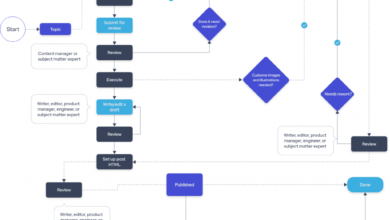
With a prioritized list, I map each keyword to a content format. If the SERP shows lists, I write a listicle. If it shows calculators, I build a tool. I don’t try to reinvent the wheel; I try to be the best version of the wheel. This is where the workflow moves from strategy to production: Brief → Draft → Edit → Publish → Interlink.
However, execution is often the bottleneck. If I find 50 high-quality gaps but can only write four articles a month, my strategy stalls. If I need to scale, I can use an AI SEO tool like Kalema to bridge the gap between planning and publishing. Kalema acts as a robust SEO content generator that adheres to the structural requirements I identify in my briefs. For individual high-value pieces, I use the AI article generator to create first drafts that are 80% there, allowing me to focus on humanizing and verifying facts. When I need to build out an entire supporting cluster quickly to gain topical authority, the Bulk article generator handles the heavy lifting, ensuring I don’t leave opportunities on the table due to lack of time.
Intent → format mapping (a quick cheat sheet)
I keep this sticky note on my desk:
- Informational (“What is…”): Guide or Definition Block.
- How-to (“How to…”): Step-by-step Tutorial.
- Comparison (“X vs Y”): Comparison Table/Article.
- Transactional (“Buy…”, “Service”): Product Landing Page.
Where on-page SEO fits in the workflow (so I don’t bolt it on later)
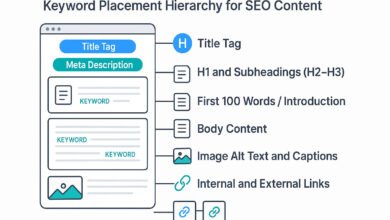
I learned the hard way that trying to “SEO” a piece of content after it’s written is painful. I now define the Title Tag, H1, H2 structure, and internal linking targets before writing begins. The brief dictates the SEO; the writer (or I) focuses on the quality.
Make your keyword gap analysis future-proof: optimize for AI search (AEO/GEO) alongside rankings

Ranking in the traditional “10 blue links” is still vital, but I also want to appear in AI Overviews and answer engines like ChatGPT or Perplexity. This is called Answer Engine Optimization (AEO). The good news is that optimizing for AI often makes content better for humans, too.
AI models crave structure. They look for confidence, clarity, and consensus. When I write to fill a gap, I don’t bury the lead. I state the answer clearly at the top.
The “answer-ready” writing pattern I use (definition → steps → pitfalls → recap)
I use a simple pattern to make my content easy to cite:
- Direct Definition: “X is Y.” (No fluff).
- Structured List: “Here are the 3 steps…”
- Evidence: “According to [Data Source]…”
- Nuance: “However, consider…”
Schema markup: when it helps (and when it’s not worth it)
I keep it simple with Schema. I don’t obsess over every type, but I do use FAQ Schema when I have a dedicated Q&A section, and HowTo Schema for step-by-step guides. I validate everything using Google’s Rich Results Test. It doesn’t guarantee an AI citation, but it definitely helps the bots understand the context.
Common keyword gap analysis mistakes (and how I fix them fast)

Here are the pitfalls I fell into early on, so you don’t have to:
- Comparing to the wrong competitors: I used to compare my blog to Wikipedia. Fix: Only compare against sites selling what I sell or similar sized publishers.
- Creating “Cannibal” Content: I wrote five different articles for “content marketing tips.” Fix: Cluster keywords by intent; one page per intent.
- Ignoring SERP Intent: I tried to rank a blog post for a keyword where Google only showed product pages. Fix: Always check the SERP first.
- Skipping Internal Links: I published new gap content but forgot to link to it from my power pages. Fix: Update 3–5 old relevant articles to link to the new piece immediately.
FAQ: keyword gap analysis questions beginners ask (free tools, prioritization, and AI results)
What is a keyword gap analysis, and why should I use it?
It is a strategic process to identify search terms your competitors rank for that you do not. You should use it to find validated traffic opportunities without guessing, ensuring every piece of content you create has a proven audience.
How do I start a keyword gap analysis using free tools?
You don’t need expensive software. Start by exporting your own data from Google Search Console. Then, identify top competitors in Google Search, manually review their H1s and titles, and use Google Keyword Planner to estimate volumes. Combine this data in a spreadsheet to find the gaps.
How should I prioritize the identified keyword gaps?
Don’t just chase volume. Use ICE scoring (Impact, Confidence, Ease). I typically prioritize keywords that have high business relevance (Impact) and low difficulty (Confidence), even if the search volume is modest.
What format should I use to optimize for AI-driven search results?
Focus on clear, structured formatting. Use concise definitions, bulleted lists, and header tags (H2, H3) logically. Answering questions directly (Q&A format) increases the likelihood of being cited by AI Overviews and answer engines.
Conclusion: my keyword gap analysis checklist + next actions
Keyword gap analysis isn’t a one-time magic trick; it’s a hygiene habit I perform every quarter. It stops me from relying on gut instinct and forces me to look at the market reality. To recap, here is the path:
- Compare against real SERP competitors, not just business rivals.
- Filter by intent and feasibility, not just volume.
- Prioritize using ICE to focus on business outcomes.
Your Next Steps for Today:
- Open Google Search Console and export your “Performance” report.
- Google your top 3 services/products and identify 2 true competitors.
- Find 5 keywords they rank for that you don’t.
- Draft one brief for the highest-value gap.
You don’t have to close every gap this week. Just close the ones that matter.