Under the Radar: Hunting for High Traffic Low Competition Keywords with Zero Competition
Introduction: Under the Radar keyword research (and why I don’t chase “easy wins”)

I still remember the first time I sat down to do “real” keyword research. I opened a popular tool, filtered for high volume, and stared at a list of terms dominated by Wikipedia, Amazon, and Forbes. It felt impossible. The advice I’d read—to just “find high traffic low competition keywords”—felt like a cruel joke. The math didn’t add up.
If you are running a business site, a SaaS blog, or a niche affiliate project in the US market, you have likely hit this exact wall. You want traffic that converts, but the “easy wins” usually turn out to be junk volume with zero intent, or they aren’t actually easy at all.
Over the years, I’ve learned that the real wins are often hidden. They aren’t the big, flashy numbers on the dashboard. They are specific, intent-driven phrases—sometimes showing zero search volume—that actually drive business results. In this guide, I’ll walk you through the exact workflow I use to find these opportunities, how I validate them manually to avoid getting burned by tools, and how to build a portfolio that aggregates into serious traffic.
What “high traffic low competition keywords” really means in 2026 (and why “zero competition” is usually a myth)

Let’s get the hard truth out of the way: if a keyword has 50,000 monthly searches and clear commercial intent, it is not low competition. In 2026, “high traffic low competition” rarely refers to a single golden keyword. Instead, it refers to a strategy of aggregation.
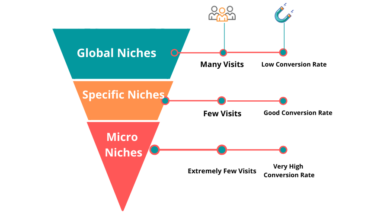
Modern SEO is about capturing traffic through long-tail clusters. While individual long-tail keywords might only bring in 50 or 100 visitors a month, they are far easier to rank for and convert at a much higher rate. In fact, industry data suggests that long-tail keywords (3+ words) account for 70–92% of all search traffic and convert nearly 2.5× better than short-tail terms [Source: RankTracker 2025].
Furthermore, an astounding 94.74% of keywords receive 10 or fewer monthly searches. Beginners often look at that stat and see a wasteland. I look at it and see a goldmine. When you stack 50 of these “low volume” articles together, you aren’t just getting traffic; you are getting highly qualified users who know exactly what they want. That is the new definition of high traffic: volume built brick by brick, not hit by a lottery ticket.
Quick glossary (KD, long-tail, SERP features, intent)
Before we dive into the workflow, let’s agree on the terms. I use these definitions to keep my research grounded in reality:
- KD (Keyword Difficulty): A tool’s estimate of how hard it is to rank. My take: It’s a useful filter, but I never trust it blindly without looking at the SERP.
- SERP Features: The non-organic elements on Google (ads, map packs, featured snippets). Why it matters: Too many features push your organic result down, reducing click-through rates even if you rank #1.
- Search Intent: The why behind the search (e.g., trying to buy, trying to learn, or trying to find a specific website). If you miss this, you won’t rank.
- Long-tail Keywords: Specific, usually longer phrases (e.g., “payroll software for small business owners” vs. “payroll”). They have lower individual volume but higher conversion intent.
The real “traffic” game: aggregation across a portfolio
This is where the magic happens. Instead of fighting for one keyword with 10,000 searches (and failing), I aim for a portfolio of keywords. If I identify a cluster of 20 related low-competition terms that each get ~200 searches, that is a potential pool of 4,000 highly targeted searches. Because the competition is lower, I can rank for many of them quickly. This aggregated traffic is often more stable and valuable than ranking for a single “vanity” keyword.
The metrics I use to spot low-competition opportunities (without getting fooled by tools)

I’ve been burned by KD-only decisions more times than I care to admit. I used to see a “Green” KD score of 15 and think, “Done deal.” Then I’d write the article, publish it, and watch it sit on page 3. Why? Because I ignored the SERP (Search Engine Results Page) reality.
Tools are fantastic, but they are estimates. They often round low-volume numbers down to zero, and they calculate difficulty based on backlinks, not content quality. To spot real opportunities, I look for a balance of decent volume potential and approachable competition.
Here is how the landscape generally looks in 2026 based on data and my experience:
Table: Volume bucket vs. average KD (and what I target first)
| Volume Bucket | Avg KD (Est.) | Typical SERP Landscape | My Take / Action Strategy |
|---|---|---|---|
| High (10k+ searches) | ~67 | Dominated by big brands, Wikipedia, major publishers. | Avoid unless you have massive authority. It’s a resource sink. |
| Medium (1k–10k searches) | ~42 | Mix of authority sites and niche experts. | Target selectively. Only if I can offer a unique angle or better data. |
| Low (100–1k searches) | ~28 | Forums, smaller blogs, outdated content. | The Sweet Spot. This is where I build the bulk of my portfolio. |
| Zero/Micro (<100 searches) | N/A | Often empty or poorly matched results. | Hidden Wins. Great for high-intent, bottom-of-funnel conversions. |
Manual validation checklist (the 7-point SERP reality check)
Before I commit resources to writing, I run a 60-second manual audit. I literally type the keyword into Google and check these seven points:
- Intent Match: Do the results answer the specific question? If I see mismatched results, that’s an opportunity.
- Domain Strength: Are the top 3 results behemoths (G2, Capterra, Forbes)? If yes, red flag.
- Content Quality: Is the ranking content thin, poorly formatted, or AI-spam? If yes, green light.
- Forum Presence: Are Reddit or Quora threads ranking in the top 5? This is a massive green light—it means Google is starving for a good answer.
- Freshness: Are the articles from 2019? If so, I can beat them with updated info.
- SERP Features: Is the screen covered in ads and snippets? Even a #1 rank might not get clicks here.
- Spot the Gap: Is there something obvious missing? (e.g., no pricing table, no video, no clear definition).
A step-by-step workflow to find high traffic low competition keywords (tools + judgment)

This is the exact workflow I run. It usually takes me under an hour to map out a month’s worth of content. It’s tool-agnostic, so you can use Semrush, Ahrefs, or even free alternatives, but having a robust tool helps speed up the filtering.
The Flow: Seed → Expand → Filter → Cluster → Validate → Prioritize
Step 1: Start with business intent, not a giant keyword list
The biggest mistake I see beginners make is typing a broad term like “marketing” into a tool. You’ll drown in noise. I start with specific seed patterns that signal business intent. I want keywords that imply a problem to be solved.
- “{Service} cost” (e.g., “HR software cost”)
- “{Tool} alternatives” (e.g., “Asana alternatives for small teams”)
- “How to {solve problem}” (e.g., “how to automate payroll”)
- “{Industry} checklist” (e.g., “restaurant opening checklist”)
- “Best {product} for {persona}” (e.g., “best CRM for realtors”)
Step 2: Expand with AI-assisted clustering + free SERP hints
Once I have my seeds, I plug them into a keyword tool to generate a broad list. Then, I look at the groups or clusters. Most modern tools (like Semrush Keyword Magic or Ahrefs) group keywords by topic.
I also check Google’s free features. I’ll search my seed term and look at the “People Also Ask” (PAA) box. If I search “payroll software for small business,” PAA might show “Can I do my own payroll?” or “What is the cheapest payroll software?” These are gold—they are natural questions real humans are asking, often with lower competition than the head term.
Step 3: Filter for opportunity (a beginner-friendly threshold set)
If you are a new site, you need to be realistic. I apply strict filters to narrow down the list of thousands to a manageable few dozen.
- Volume: 100 – 1,000 (I sometimes go up to 5,000 if the niche is narrow).
- KD: < 30 (This is a starting point, not a law).
- Word Count: 3+ words (Ensures I’m getting long-tail specificity).
- Include: Modifiers like “for”, “how”, “vs”, “best”.
Note: If your site has high authority (DR 50+), you can relax the KD filter to < 50.
Step 4: Validate in the SERP (what I look for before I commit)
I take my filtered list and run the “7-point reality check” I mentioned earlier. I’m looking for weakness. If I see a SERP where the top result is a PDF from a university or a forum thread from 2021, I know I can win. If the top result is a 5,000-word guide from HubSpot, I’ll walk away. I’d rather win a small battle than lose a big one.
Step 5: Prioritize with a simple score (Opportunity × Value × Effort)
I don’t just guess what to write first. I use a quick mental scoring model. I rate each factor on a scale of 1–3.
| Keyword | Opportunity (Weak SERP) | Value (Business Fit) | Effort (Content ease) | Total Score |
|---|---|---|---|---|
| “best payroll for contractors” | 3 (High) | 3 (High) | 2 (Medium) | 18 (Winner) |
| “what is payroll” | 1 (Low – High Comp) | 1 (Low – Too broad) | 3 (Easy) | 3 (Skip) |
Finding “zero-volume” keywords that still bring customers (my under-the-radar sources)

Some of my best-performing articles target keywords that tools say have “0” volume. This sounds counterintuitive, but here is the secret: tools are estimates based on clickstream data. They often miss low-frequency B2B queries entirely.
If a keyword has zero volume in a tool but shows up in Google Trends or your own Search Console, it has traffic. And usually, the people searching for these hyper-specific terms are desperate for a solution.
How I validate a “zero-volume” keyword fast
- Check Google Trends: Does the line move? If yes, people are searching.
- Google Autosuggest: Type the beginning of the phrase. If Google finishes the sentence for you, people are searching it.
- PAA Expansion: Does the query trigger a “People Also Ask” box? That implies Google understands the topic entity.
- Search Console Impressions: If you already have a site, check your query report. You might see impressions for terms you don’t even have a page for yet.
- Intent Check: Does it sound like a customer? “Implementation error code 503” is a zero-volume keyword that screams “I need help now.”
Real user language mining: support inbox, chat logs, sales calls
This is my favorite “hack” that isn’t really a hack—it’s just listening. Your customers are already telling you what keywords to target. I regularly dig into support tickets and sales transcripts (always anonymizing data and removing personal identifiers, of course).
I look for questions like, “Can I integrate your tool with X legacy system?” or “How do I export data for my accountant?”
Example:
Source: Support Ticket
User Question: “Do I need to pay extra for a multi-state setup?”
Keyword Opportunity: “multi-state payroll software pricing” or “payroll compliance for remote teams in different states.”
Content Type: A detailed guide or comparison table.
These queries rarely show up in Semrush, but they convert like crazy because they address a specific barrier to purchase.
Turning keywords into a scalable content plan (clusters, briefs, and internal links)

Once you have a list of validated keywords, don’t just write random blog posts. You need a structure. I organize my keywords into clusters. I pick one broad “Pillar” topic and support it with 4–6 specific “Cluster” articles. This builds topical authority, signaling to Google that you are an expert on the entire subject.
For high-volume production without sacrificing quality, using an SEO content generator can help streamline the briefing and drafting process, ensuring that every piece of the cluster is aligned. But whether you use AI or write manually, the planning phase is non-negotiable.
Table: Example cluster plan (pillar + support articles)
| Role | Target Query | Intent | Content Format | Internal Links To |
|---|---|---|---|---|
| Pillar | “Small business payroll guide” | Info/Comm | Ultimate Guide | All support pages |
| Support | “Payroll software for 10 employees” | Commercial | Listicle/Review | Pillar |
| Support | “How to switch payroll providers” | How-to | Step-by-step | Pillar + Software Review |
| Support | “Payroll compliance checklist 2026” | Info | Checklist/PDF | Pillar |
| Support | “Gusto vs ADP for startups” | Commercial | Comparison | Pillar |
Quality controls before publishing (on-page SEO where it belongs)
I treat on-page SEO as a final polish, not the main event. Before I hit publish, I run a quick editorial check. This isn’t just about checking boxes; it’s about user experience.
- Title & H1: Do they include the primary keyword naturally?
- Heading Structure: Are H2s and H3s logical? (Scanners should understand the article just by reading headers).
- Internal Links: Have I linked to the Pillar page? Have I linked to other relevant support articles?
- Meta Description: Does it encourage a click? (Think of it as ad copy).
- FAQ Schema: Did I add an FAQ section at the bottom to capture PAA snippets?
- Accuracy: Are my statistics recent? (I try to mark anything older than 2 years for an update).
Common mistakes when chasing high traffic, low competition keywords (and how I fix them)

I’ve made plenty of mistakes in my career. Here are the most common traps I see intermediates fall into, and how to step around them.
Mistake-to-fix list (5–8 items)
- Mistake: Trusting KD Blindly.
Why it happens: It’s easy to sort by KD and pick the lowest number.
The Fix: Always open the SERP. If the top 3 results are major brands, the KD is lying. - Mistake: Ignoring Search Intent.
Why it happens: You see a keyword like “payroll template” and write a blog post, but the SERP is full of downloadable Excel files.
The Fix: Match the format. If Google wants a tool or template, build that—don’t write a 2,000-word essay. - Mistake: The “One-Off” Article.
Why it happens: Writing random low-competition posts without connecting them.
The Fix: Commit to clusters. Don’t publish a lonely article; give it friends (internal links) to boost its authority. - Mistake: Misunderstanding “Zero Volume.”
Why it happens: Fearing keywords with “0” or “N/A” volume.
The Fix: Validate with Google Trends or PAA. If people are asking, it’s worth answering—especially for bottom-funnel queries. - Mistake: Set It and Forget It.
Why it happens: Assuming rankings last forever.
The Fix: Schedule a refresh every 60–90 days. Competitors will spot your success and try to outdo you.
FAQs + recap: how many keywords to target, what tools to use, and what I’d do next

To wrap things up, here are the answers to the questions I get asked most often about this strategy.
FAQ: Why focus on low-competition keywords when traffic seems low?
Think of it like an investment portfolio. You could bet everything on one volatile stock (a high-volume keyword) and likely lose. Or, you can invest in a diversified index fund of 100 stable, smaller assets (low-competition keywords). The latter offers predictable, aggregated growth. Plus, the conversion rate on these specific terms is often double or triple that of broad terms.
FAQ: How many low-volume keywords should I target?
Aim for a balanced distribution. Research suggests a healthy mix is roughly 5–15% high-volume (for brand awareness), 40–60% medium-volume, and a long tail of low-volume terms [Source: RankTracker]. If you are just starting, I’d suggest building one cluster at a time—perhaps 1 Pillar and 10–15 low-volume support articles.
FAQ: Which tools help find high-traffic, low-competition keywords?
I use a mix. Semrush Keyword Magic Tool and Ahrefs Keywords Explorer are the industry standards for filtering and data. Google Keyword Planner is great for broad volume data. But my secret weapons are free: Google Trends, Search Console, and manual SERP auditing. They tell you the truth that paid tools sometimes smooth over.
FAQ: Are zero-volume keywords worth the effort?
Absolutely, provided you validate them. If a zero-volume keyword represents a high-intent buyer question (e.g., “how to fix X error in [Your Software]”), that single visitor is worth more than 1,000 visitors reading a generic definition. Just keep the production effort reasonable.
FAQ: How often should I refresh keyword research?
I recommend a full refresh every 60–90 days. Search trends shift, new competitors enter the market, and your own domain authority grows, unlocking new difficulty tiers you couldn’t target before.
Recap (3 bullets) + Next actions (3–5 steps)
If you take nothing else away from this article, remember these three things:
- Intent beats volume. A small audience of buyers is better than a stadium of window shoppers.
- Tools are just maps, not the territory. Always check the SERP with your own eyes before writing.
- Aggregation wins. Build clusters of related content to dominate a topic, not just a keyword.
Your Next Actions (Do this week):
- Open your AI article generator or planning tool and create a new project folder.
- Pick one seed topic related to your core service (e.g., “payroll”).
- Run the workflow: Expand list -> Filter for KD <30 -> Identify 5 “Zero Competition” winners.
- Audit the SERPs for those 5 keywords using the 7-point checklist.
- Plan your first cluster: 1 Pillar page + those 5 verified support articles.