Introduction: A keyword research guide for intent-first SEO (and why volume isn’t enough anymore)

I used to chase high-volume keywords like a moth to a flame. If a tool showed me 5,000 monthly searches and a low difficulty score, I’d write the article immediately. Six months later, I’d have traffic, but zero leads. The traffic was ‘empty calories’—people looking for definitions, not solutions.
That approach doesn’t work anymore. In 2026, keyword research isn’t about finding the highest volume; it’s about mapping intent to business value. With AI Overviews dominating informational queries and zero-click searches rising, the game has shifted from ‘getting traffic’ to ‘getting the right traffic.’
This guide isn’t a glossary of terms. It is the exact framework I use to analyze intent, gauge real difficulty, and forecast ROI before I write a single word. It is designed for US-based marketers and founders who need their content to drive revenue, not just vanity metrics.
What changed in search: intent, AI Overviews, and zero-click reality in the US

If you search for ‘how to do keyword research’ today, the result page looks nothing like it did a few years ago. You aren’t just seeing ten blue links. You’re likely seeing an AI Overview summarizing the answer, a ‘People Also Ask’ block, perhaps a video carousel, and a list of related software ads.
The implications are massive. Zero-click searches now account for roughly 58–59% of all queries in the US . This means more than half of users get their answer without leaving Google. Furthermore, AI agents now initiate approximately 33% of organic searches , retrieving information to serve users in multi-modal contexts (voice, visual, or chat).
Here is how I break down the modern SERP (Search Engine Results Page) features and how they change my content strategy:
| SERP Feature | Impact on Clicks (CTR) | How I Adapt Content |
|---|---|---|
| AI Overview | High reduction (users read the summary) | Optimize for snippet inclusion (clear definitions, lists) and target complex, opinion-based sub-topics AI can’t answer well. |
| Featured Snippet | Reduces top organic result CTR by ~12–18% | Structure answers in clear, concise HTML lists or tables near the top of the page. |
| Local Pack | Reduces organic CTR by ~42% | Focus on ‘near me’ optimization and Google Business Profile signals rather than just organic rankings. |
| Shopping/Ads | pushes organic results below the fold | Target long-tail comparison keywords where ad density might be lower, or invest in paid support. |
Quick definitions (without the jargon dump)
Before we dive into the workflow, let’s align on terms. A common misconception is that Keyword Difficulty (KD) is a definitive rejection metric. It isn’t; it’s just a filter.
- Keyword Intent: The why behind the search. Is the user learning (Informational), looking for a specific site (Navigational), comparing options (Commercial Investigation), or ready to buy (Transactional)?
- Keyword Difficulty (KD): A tool’s estimate of competition, usually based on backlinks. It does not account for topical authority or content quality.
- SEO ROI: Calculated as: (Estimated Traffic x Conversion Rate x Customer Value). It’s the business case for writing the article.
The business implication: why buyer-intent can beat high volume
Here is the reality for most B2B businesses: Buyer-intent keywords (like ‘best payroll software for small business’) often convert 10–50x better than broad terms (like ‘what is payroll’) .
I recall working on a project where we pivoted from a high-volume glossary strategy to a low-volume comparison strategy. We went from targeting ‘marketing automation’ (huge volume, low intent) to ‘marketing automation for agencies pricing.’ Traffic dropped by 40%, but demo requests tripled. The volume was lower, but the people searching were holding a credit card, not a textbook.
My intent-first framework: analyze keyword intent, difficulty, and ROI (step-by-step)

This is the exact workflow I use. I don’t rely blindly on tools to tell me what to write; I use them to gather data, then I use my brain (and the browser) to make decisions. Here is how I validate a keyword opportunity from start to finish.
Step 1 — Start with the business outcome (not the keyword)
Most people start by typing a seed keyword into a tool. I start with the bank account. What are we trying to sell? If I have limited resources, I can’t afford to guess.
- If I sell software: My outcome is a demo or trial. I look for: ‘best,’ ‘alternatives,’ ‘vs,’ ‘integration.’
- If I sell services: My outcome is a consultation. I look for: ‘agency,’ ‘consultant,’ ‘services,’ ‘firm.’
- If I sell e-commerce: My outcome is a cart add. I look for: ‘buy,’ ‘cheap,’ ‘deals,’ ‘reviews.’
Step 2 — Identify intent by reading the SERP like a journalist
Tools are often wrong about intent. I’ve seen plenty of keywords labeled ‘Transactional’ where the top 10 results were purely informational blog posts. The SERP never lies.
I open an incognito window, set my location to the US (or my target market), and search the term. I scan specifically for:
- AI Overview presence: Is Google answering this upfront?
- Page Types: Are the top results product pages, blog posts, forum discussions (Reddit/Quora), or tools?
- Dominant Angle: Are titles promising a ‘guide,’ a ‘list,’ or a ‘calculation’?
If the SERP is dominated by heavy forum discussions (Reddit threads), it signals that users are unhappy with generic corporate answers. That’s an opportunity for a high-empathy, experience-based article. If the SERP is all product homepages, a blog post will likely struggle to rank.
Step 3 — Estimate difficulty the modern way (beyond a single KD number)
Don’t let a high KD score scare you off if the intent match is perfect. Conversely, don’t trust a low KD if the top results are massive brands. I look at these signals:
| Difficulty Signal | What I Look For | What It Means |
|---|---|---|
| Topical Authority | Do ranking sites specialize in this niche? | If general news sites are ranking, a niche expert (you) can often beat them. |
| Content Depth | Are the top posts thin or outdated? | Thin content = easy opportunity, regardless of domain authority. |
| SERP Volatility | Do results change frequently? | High volatility suggests Google isn’t satisfied with current answers. |
| UGC/Forums | Are Reddit/Quora in the top 3? | Green light. It usually means there’s a ‘trust gap’ you can fill. |
Step 4 — Forecast ROI with a simple math model (traffic x value x probability)
This is where I separate the ‘nice-to-haves’ from the business drivers. I use a simple spreadsheet model to estimate value. I keep my assumptions conservative, especially since AI Overviews are eating into CTR.
The ROI Formula: (Monthly Volume x Est. CTR x Est. Conversion Rate x Lead Value)
Let’s look at a hypothetical example for a B2B SaaS selling HR software:
| Keyword | Volume | Intent | Est. CTR | Est. CVR | Est. Leads/Mo | Priority |
|---|---|---|---|---|---|---|
| “what is hr software” | 2,000 | Info | 1.5% (AI impact) | 0.5% | 0.15 | Low |
| “best hr software for startups” | 150 | Comm. | 10% | 4.0% | 0.60 | High |
Even with 10x less volume, the second keyword is 4x more valuable. I treat these numbers as directional estimates, not guarantees, but they prevent me from wasting time on vanity keywords.
Step 5 — Turn the winning keyword into a page plan (content angle + on-page SEO)
Once I pick a keyword, I don’t just start writing. I plan the ‘skeleton’ of the page to ensure it hits the technical marks.
My Publish-Ready Checklist:
- H1 Tag: Includes primary keyword + compelling hook.
- Snippet Target: A 40–60 word definition or answer immediately following the H1 or first H2, tagged with
<p>. - Structure: H2s matches the sub-topics I saw in my SERP analysis.
- Schema: FAQ schema or Product schema if relevant.
- Visuals: Where can I add a table or diagram to keep the user from bouncing?
When I want to win a snippet, I write the definition as if it were a dictionary entry—neutral, factual, and concise—before expanding on it in the rest of the section.
Tools vs. judgment: how I use keyword tools (and why manual SERP audits still win)

A frequent question I get is: “Do I still need expensive tools?” Yes, but not for the reason you think. Tools are excellent for gathering raw data and generating ideas, but they are terrible at nuance. I have seen tools report ‘zero volume’ for keywords that actually drive dozens of highly qualified visitors a month.
If you want to scale this process—creating briefs and drafts based on verified data—using a smart SEO content generator can help bridge the gap between raw data and a finished draft without losing the strategic intent.
Here is how I balance automation with human judgment:
| Tools Can Tell You… | Tools Can’t Tell You… | What I Do Instead |
|---|---|---|
| Raw search volume history | If that volume is actually ‘buying’ traffic | Manual SERP check for ads and competitors. |
| Keyword Difficulty score | If the top ranking page is a low-quality forum | Check the actual URLs ranking in top 3. |
| Related keyword lists | Which related terms are actually synonyms | Search both terms; if results are identical, they are synonyms. |
A practical research stack for beginners (minimum viable setup)
You don’t need a $500/month enterprise stack to start. Here is my lean setup:
- Google Search (Incognito Mode): The ultimate source of truth.
- Google Search Console: To find what you are already ranking for (the easiest wins).
- One Keyword Tool: (e.g., Ahrefs, Semrush, or Ubersuggest) for volume data and idea generation.
- Spreadsheet: To map keywords to intent and track ROI.
- Browser Extension: A simple VPN or location changer to check US-specific results (e.g., ‘near me’ or state-level queries).
When AI Overviews show up: how I adapt content for visibility
We know that AI Overviews appear in ~30% of searches (early 2025 data) and up to ~80% for informational keywords . Instead of fighting this, I optimize for it.
If an AI Overview is present, I:
- Ensure my content has a clear, factual answer block (40–50 words) that an AI can easily cite.
- Use structured data (Schema.org) to help machines understand the entities on my page.
- Include unique data or strong opinions later in the article—things AI cannot easily hallucinate or summarize from a generic database.
From keywords to content that ranks: clustering, briefs, and scalable publishing (without losing intent)

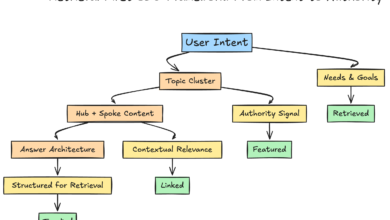
Keyword research is useless if it sits in a spreadsheet. The goal is to move from ‘keyword’ to ‘published asset’ efficiently. This is where clustering comes in. Instead of writing one isolated post, I build a topical cluster that signals authority to Google.
For those managing multiple sites or large clusters, an Automated blog generator can handle the heavy lifting of drafting these clusters, provided you have validated the intent first.
A simple topic cluster example (with long-tail doing the heavy lifting)
Long-tail keywords (3+ words) make up 70–92% of all traffic and convert significantly better . I always build a cluster with one ‘Pillar’ and 5–7 ‘Spoke’ pages. Let’s stick with the ‘HR Software’ example for a US audience:
- Pillar Page: Best HR Software for Small Business (Commercial Intent – ‘Best’ list)
- Spoke 1: HR software pricing comparison (Commercial)
- Spoke 2: HR software for California startups (Local/Niche)
- Spoke 3: Gusto vs. Rippling for small business (Comparison)
- Spoke 4: Benefits of automated payroll systems (Informational – Feeder)
- Spoke 5: HR software with time tracking features (Feature specific)
This structure helps the main page rank faster because the ‘spokes’ pass authority upward via internal links.
Brief template: what I include so writers don’t miss intent
I’ve had writers turn a ‘comparison’ assignment into a ‘definition’ post because my brief was weak. Now, I use this non-negotiable template:
- Target Keyword: [Primary Keyword]
- User Intent: [e.g., Commercial Investigation – they want to compare X and Y]
- Primary Goal: [e.g., Click the ‘Free Trial’ button]
- Must-Have Sections: [List H2s based on SERP analysis]
- Snippet Target: [Question to answer in <60 words]
- Red Flag to Avoid: [e.g., “Do not spend 500 words defining what software is.”]
How I measure success: tracking keyword ROI, not just rankings

Ranking #1 is vanity. Revenue is sanity. In a world where zero-click searches are the norm, your rank tracking tool might show you at position 1, but your traffic might be flat because of an AI Overview. That is why I track business metrics.
If you are producing content at volume, using an AI article generator helps you iterate faster, but you must measure the output’s performance relentlessly.
A beginner KPI dashboard (what I track weekly vs monthly)
I keep it simple so I don’t get overwhelmed.
Weekly Checks (Health):
- Indexing status (is the page actually on Google?)
- Impressions (are people seeing it?)
- CTR dips (did an AI Overview just pop up?)
Monthly Checks (Wealth):
- Conversions (Demo requests, signups)
- Assisted Conversions (Did this page start the journey?)
- Revenue per 1,000 visitors (RPM)
Common mistakes I see in keyword intent, difficulty, and ROI analysis (and how to fix them)
I’ve made every mistake in the book. I once spent weeks building a massive cluster for a keyword that had zero commercial intent. We ranked #1, got 50,000 visitors, and generated exactly zero dollars.
When you are looking to scale, you might consider a Bulk article generator. While powerful, remember that bulk generation requires more strict adherence to these principles, not less. Automating a bad strategy just lets you fail faster.
Mistake-to-fix checklist (copy/paste)
- Mistake: Chasing high volume (Head terms).
Fix: I prioritize specific, long-tail queries with high conversion intent. - Mistake: Ignoring the SERP features.
Fix: I always check if a video, local pack, or AI Overview is stealing the clicks. - Mistake: Cannibalization (Writing the same thing twice).
Fix: I check if I already have a page ranking for this topic before creating a new one. - Mistake: No clear CTA (Call to Action).
Fix: I ensure every page has a logical next step for the user (e.g., ‘Read this next’ or ‘Get a demo’).
FAQs: intent, long-tail keywords, AI Overviews, and whether keyword tools still matter
Why should I prioritize buyer-intent keywords over high-volume terms?
Think of it as the difference between window shoppers and people standing at the register with a wallet in hand. A keyword like ‘CRM pricing’ might only get 50 searches a month, but those 50 people are evaluating costs. A broad term like ‘what is customer relationship management’ might get 5,000 searches, but they are likely students or beginners. Data suggests buyer-intent keywords can convert 10–50x better .
What is an AI Overview, and how does it affect SEO?
An AI Overview is Google’s AI-generated summary that appears at the top of the results for many queries. It essentially answers the user’s question immediately, which reduces the need to click on organic links. To adapt, I format my content with clear, objective definitions (to get cited in the overview) and add deep, experience-based details that the AI cannot easily replicate.
How important are long-tail keywords?
Extremely important. Long-tail keywords (like ‘best vegan protein powder for weight loss’) account for 70–92% of all search traffic. They are easier to rank for and typically rank 11 positions faster than broad head terms . They are the secret weapon for smaller sites competing against giants.
Given shrinking organic CTR, how should I optimize for visibility?
Not every search results in a click, but you can still win visibility. I optimize for this ‘zero-click’ world by targeting Featured Snippets. I use lists, tables, and concise answer blocks (40–60 words) near the top of my content. Even if a user doesn’t click, seeing my brand name as the authoritative source builds trust and can lead to a direct visit later.
Are keyword tools still useful?
Absolutely, but I treat them as idea generators, not the final judge. Tools are great for finding patterns and checking raw data, but they often lag behind real-time trends. If a tool says a keyword has ‘0 volume’ but the SERP is full of ads and fresh content, I trust the SERP. The market puts money where the value is.
Conclusion: my 3-point recap + next actions to apply this keyword research guide
Keyword research doesn’t have to be a guessing game. By shifting your focus from volume to intent, you build a sustainable engine for growth.
Recap:
- Intent comes first: Validate what the user wants by looking at the SERP manually.
- Difficulty is a signal, not a wall: Look for thin content and forums, not just KD scores.
- ROI is the goal: Focus on keywords that drive revenue, even if the search volume seems low.
Next Actions for this week:
- Pick one product or service you want to sell.
- Audit 10 keywords manually in Incognito mode and note the SERP features.
- Identify 3 long-tail opportunities where the current results are weak or generic.
Kalema is here to help you scale this process, turning your strategic briefs into high-quality drafts efficiently, so you can spend more time on strategy and less on typing.