Introduction: Visual search is the new SEO surface on Lemon8 (and I’ll show you the system)
I still remember my first month testing Lemon8. I posted ten times—beautiful aesthetic photos, polished carousels, the works. Nine of them sat at 40 views. The tenth one randomly hit 12,000 views. I had no idea why. Was it the cover photo? The time of day? Pure luck?
As a marketer, I hate luck. You can’t scale luck.
So, I stopped guessing and started treating Lemon8 less like a social network and more like a search engine. The moment I shifted my strategy from “hoping for the For You feed” to “building for visual search,” the volatility leveled out. Views became consistent, saves went up, and traffic started flowing weeks after the publish date.
This guide isn’t about chasing viral trends. It is about building a content machine that leverages Lemon8’s unique position as a hybrid search engine—one where 84% of traffic reportedly comes from organic search. Whether you are a solo creator or managing a brand, this is the operational system to dominate this emerging SEO surface.
What you’ll get from this guide
- The Mechanics: A plain-English breakdown of how Lemon8 discovery actually works (For You vs. Search).
- The Workflow: A repeatable weekly process to research, batch, and publish without burnout.
- The Templates: Copy-paste frameworks for keyword research, content briefs, and caption structures.
- The Optimization Checklist: Exact steps to make your titles, captions, and alt-text searchable.
- The Troubleshooting Guide: How to fix common mistakes and measure what matters.
Why Lemon8 is worth building on now: growth signals, hybrid feeds, and organic search leverage

If you feel like you missed the boat on TikTok in 2019, Lemon8 is your second chance—but with a twist. It isn’t just a “TikTok for photos.” It is effectively Pinterest meets Instagram, built by ByteDance (TikTok’s parent company). This lineage gives it a massive advantage: a discovery algorithm that is arguably the best in the world at surfacing new creators.
For US-based creators and businesses, the opportunity lies in the “hybrid feed.” Unlike Instagram, where your reach is often capped by your follower count, Lemon8 pushes content into a personalized ‘For You’ feed based on interest graphs, not social graphs. But the real leverage—the part most people miss—is the search bar.
Data suggests that a massive chunk of Lemon8’s utility comes from users actively searching for solutions: “summer nail inspo,” “high protein meal prep,” or “small apartment decor.” When you optimize for these terms, your content has a shelf life of months, not minutes. While platforms change and algorithms are volatile, the fundamental user behavior of searching for visual answers is stable. That is where we build our foundation.
Quick fact box: what the data suggests about discoverability
| Engagement Rate | ~6% (significantly higher than industry averages for mature platforms) [Reported] |
| Search Traffic | 83.6% of traffic originates from organic search sources [Estimated] |
| US Presence | ~1 million daily active users in the US as of late 2024 |
| User Base | Heavily Gen Z, favoring polished, magazine-style aesthetics |
What makes Lemon8’s algorithm different (in plain English)

If I were starting today with zero followers, this is the only platform I would bet on for immediate cold traffic. Here is why:
- Interest Graph > Social Graph: The algorithm cares about what your content is, not who you know. If you post a high-quality skincare review, it gets shown to skincare enthusiasts immediately, even if you have 0 followers.
- The “Double Peak” Exposure: Content often gets an initial push on the ‘For You’ feed (algorithmic surfacing). If it performs well (saves/clicks), it gets indexed for long-term search visibility.
- Categorization is King: The platform explicitly asks users to categorize content. Staying in a specific niche (e.g., “Home Organization”) trains the algorithm faster than posting random life updates.
How SEO applies to Lemon8 content: the searchable parts I optimize every time
When marketers hear “SEO,” they think of Google meta tags and backlinks. On Lemon8, SEO is more tangible. It’s about filling out the fields that the algorithm reads to understand your context. If you post a photo of a smoothie with the caption “Yum!”, you remain invisible. If you label it “High Protein Berry Smoothie Recipe for Weight Loss,” you become discoverable.
I treat every post like a mini landing page. In my workflow, I have a non-negotiable checklist of “SEO surfaces” that must be optimized before publishing. These are the levers that actually move the needle:
- The Title (On-Image & Headline): This is your H1 tag. It needs to match the user’s search query exactly.
- The Caption: The first two lines are critical for the feed preview, but the full body text is indexed for keywords.
- Hashtags: These act as broad category buckets.
- Alt Text: Often overlooked, this feature (where available/applicable) helps accessibility and gives the algorithm rigorous context about the image content.
Editor’s Note: I once audited a client’s profile who was posting great fitness tips but titling them “Monday Moves.” We changed the naming convention to specific queries like “15 Minute Core Workout” and saw a 300% increase in impressions within two weeks.
On-platform search vs. the For You feed: two different discovery jobs
A common beginner misconception is that you only need to solve for one. You need to solve for both. The ‘For You’ feed is passive discovery (interruption), while Search is active discovery (intent).
Table suggestion: Search vs. For You — intent, content style, optimization focus
| Feature | Search Traffic (Active Intent) | For You Feed (Passive Discovery) |
|---|---|---|
| User Mindset | “I have a specific problem/need.” | “Entertain or inspire me.” |
| Best Post Type | How-to guides, checklists, comparisons, specific recipes. | Aesthetic lifestyle shots, trends, humor, “day in the life.” |
| Optimization Priority | Keywords in title and caption. | Visual Hook (Cover image) and emotional resonance. |
| Success Metric | Saves, Shares, Profile Clicks. | Likes, Comments, Impressions. |
Where keywords live on Lemon8 (and how to avoid sounding spammy)
We have all seen those captions that look like a robot vomited a dictionary. Don’t do that. It kills trust. Here is my rule of thumb for placing keywords naturally:
- Title: Front-load the main keyword. (e.g., “Budget Pantry Organization Ideas”)
- First Sentence: contextualize the keyword. “Here is how I tackled my budget pantry organization using dollar store bins.”
- Body Paragraphs: Use variations naturally. “Organizing snacks,” “storage containers,” “kitchen decluttering.”
- Hashtags: Use 3-5 broad tags and 3-5 niche tags.
I recently edited a caption for a skincare post. The draft read: “Best moisturizer dry skin winter skincare hydrating cream.” It was awful. We changed it to: “Struggling to find the best moisturizer for dry skin? As winter skincare becomes a priority, this hydrating cream saved my face.” Same keywords, human delivery.
Lemon8 SEO strategy: keyword and topic research I use to build a reliable pipeline
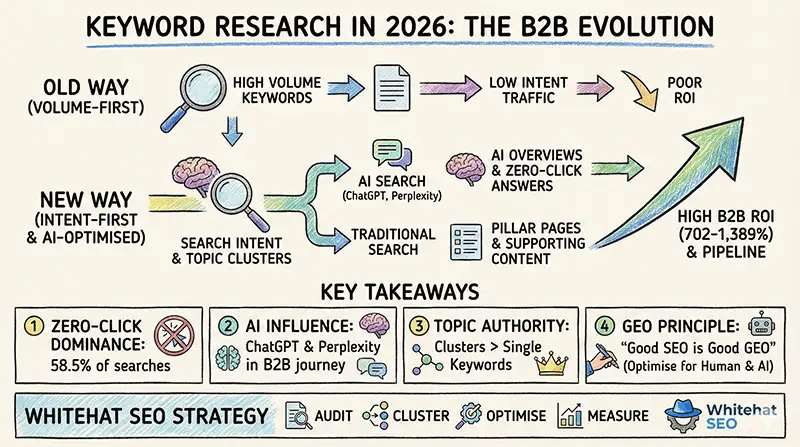
Random posting leads to random results. To build a machine, you need a topic pipeline. I use a “Cluster” strategy—similar to standard blog SEO—but adapted for visual content. This prevents the “what do I post today?” panic.
The goal is to map “Pillar Topics” (broad categories) to specific “Post Clusters” (specific queries). I validate these ideas using Lemon8’s own search bar autocomplete, comments on competitor posts, and even Google search data (since Lemon8 posts rank in Google).
Step-by-step: from niche → pillar → cluster → post ideas
- Pick your Pillar: Define your broad niche (e.g., “Meal Prep”).
- Autocomplete Mining: Type “Meal Prep” into the Lemon8 search bar. Note the suggestions: “Meal prep for weight loss,” “Meal prep ideas for work,” “Meal prep aesthetic.”
- Analyze Intent: Click the top results. Are they single photos? Carousels? Videos? Note the format that wins.
- Check Comments: Look for questions users are asking. “How long does this stay fresh?” → That is a new post idea.
- Map the Cluster: Create 3-5 specific post ideas under that one keyword.
- Output: You should now have 2 pillars + 10 specific post ideas ready to execute.
Table: Lemon8 topic cluster map template (with one worked example)
| Keyword / Topic | Search Intent | Visual Hook Idea | Title Formula | Repurpose Plan |
|---|---|---|---|---|
| Meal prep for beginners | Informational / How-to | Photo of 5 containers stacked neatly on a counter. | “My 1-Hour Sunday Meal Prep Routine” | Turn steps into a TikTok voiceover. |
| High protein lunch ideas | Inspiration / List | Close-up macro shot of the food bowl. | “3 High Protein Lunches (Under $5)” | Post recipe in caption + Pin to Pinterest. |
| Glass vs Plastic containers | Comparison / Review | Split screen image: Glass (Check) vs Plastic (X). | “Stop Buying Plastic: Why I Switched to Glass” | IG Story poll: Which team are you? |
How I build an SEO content machine for Lemon8 (workflow, roles, and cadence)

Consistency is the hardest part of SEO. It’s easy to do research; it’s hard to post 4 times a week for six months. I treat this like a manufacturing line. I separate the thinking (research) from the doing (creation).
My workflow relies heavily on batching. I never wake up and decide to write a post. That is a recipe for procrastination. Instead, I use tools to streamline the process. For drafting content at scale, I often use an AI article generator to help structure my initial thoughts and expand my bullet points into full captions, which I then edit for voice.
The 7-step workflow (repeatable for every post)
- Research (Monday – 30 mins): Fill out the cluster map. Find 5 keywords.
- Briefing (Monday – 15 mins): Create a bulleted brief for each idea. (Hook, Value, CTA).
- Shooting/Design (Tuesday – 2 hours): Shoot all photos/videos for the week at once.
- Drafting (Wednesday – 1 hour): Write titles and captions.
- QA & Optimization (Thursday – 30 mins): Check against the SEO checklist.
- Scheduling/Publishing (Daily): Post at optimal times.
- Engagement (Daily – 10 mins): Reply to comments immediately to boost algorithmic signals.
Posting cadence for beginners: what I’d do with 3–4 posts/week
If you have a full-time job, daily posting might kill you. That is fine. Consistency beats intensity. Here is a realistic schedule:
| Day | Post Type | Goal |
|---|---|---|
| Monday | Educational Carousel | Saves (High Utility) |
| Wednesday | Personal/Lifestyle Photo | Connection/Likes (High Authenticity) |
| Friday | Trend/Challenge Video | Reach (For You Feed exposure) |
| Sunday | Buffer Day / Recap | Optional / Mental Break |
Content brief template (so visuals and SEO don’t drift apart)
Target Keyword: [Insert Keyword]
Target Audience: [Who is this for?]
Visual Hook: [Describe cover image]
Title Option 1 (SEO): [Keyword first]
Title Option 2 (Clickbait): [Curiosity gap]
Caption Structure:
– Hook (Problem)
– The Fix (3 steps)
– The Result (Proof)
– CTA (Question)
Hashtags: [Paste from library]
Phrases I actually say: “Game changer,” “Honestly,” “The wildest part is…” (Keep these handy to inject personality).
Where Kalema fits in a newsroom-grade workflow (without sacrificing quality)
Scaling doesn’t mean you stop caring. It means you stop doing manual labor that doesn’t add value. In a newsroom-grade workflow, we use SEO content generator tools to handle the heavy lifting of structuring outlines and generating first drafts based on our briefs. This ensures that every post starts with a solid SEO foundation.
However, the “human editor” role is crucial. I use the AI content writer to ensure consistency in formatting and keyword usage, but I always manually refine the anecdotes and tone. It’s about process control: Brief → AI Draft → Human Polish → Publish.
Publishing optimization checklist: titles, captions, hashtags, alt-text, and engagement loops
This is your pre-flight check. If you only have time to fix one thing today, make your title searchable. But if you want the full system, run through this list before you hit publish.
- Title Check: Does it contain the primary keyword? Is it legible on the cover image?
- Caption Check: Is the hook in the first line? Did I break up walls of text with line breaks?
- Hashtag Check: Do I have a mix of broad (1M+ views) and niche (under 50k views) tags?
- Alt Text: Did I describe the image for accessibility and context?
- CTA Check: Did I ask a specific question to drive comments?
Title formulas I use (with examples beginners can copy)
- The “How-To” (Utility): How to [Benefit] without [Pain Point]. (e.g., How to Meal Prep without Spending all Sunday)
- The Listicle (Scannable): 5 [Niche] Mistakes I Made. (e.g., 5 Skincare Mistakes I Made in my 20s)
- The Comparison (Decision): [Product A] vs [Product B]: Which is worth it?
- The Transformation (Proof): How I went from [State A] to [State B].
Caption framework: Hook → steps → proof → CTA
Bad Caption: “My morning routine! So fun. #morning #coffee”
Better Caption: “Struggling to wake up early? 😴 Here is the exact morning routine that helped me become a 6 AM person without feeling tired.
1. Hydrate first…
2. No phone for 20 mins…
I’ve done this for 30 days and my energy is through the roof. What’s your biggest struggle with mornings? Let me know! 👇”
Hashtag sets: building a reusable library (broad, mid, niche)
Don’t reinvent the wheel. Keep a notes app with sets like this (example for home decor):
- Broad: #homedecor #interiordesign #homeinspo
- Mid-Tier: #apartmenttherapy #smallspaceliving #renterfriendly
- Niche: #amazonhomefinds #neutraldecor #diywalldecor
Measure, iterate, and scale: a simple testing plan for Lemon8 SEO

You can’t improve what you don’t measure. But don’t drown in data. I track only three numbers weekly: Saves (intent), Shares (virality), and Search Impressions (if available via analytics). I run 2-week sprints where I test one variable. Maybe for two weeks, I only test “Negative Hooks” (e.g., “Stop doing this”). Then I review.
Once you find a winning format, that’s when you scale. You can take that successful topic and expand it into a blog post using a Bulk article generator, or repurpose the script for YouTube Shorts. The goal is to maximize the ROI of every successful content experiment.
Table: my 2-week experiment tracker (copy/paste)
| Test Name | Hypothesis | Success Metric | Result / Decision |
|---|---|---|---|
| Carousel vs Single Image | Carousels will get more saves due to educational depth. | Save Rate | Carousels won. Decision: Use carousels for how-to content. |
| Question Titles | Questions will drive more clicks than statements. | CTR / Views | No change. Decision: Stick to statement titles for authority. |
Common Lemon8 SEO strategy mistakes (plus FAQs and next steps)
Even with a system, things go wrong. Here are the most common pitfalls I see beginners make, and exactly how to fix them.
Mistakes & fixes checklist (5–8 items)
- Mistake: Inconsistent Niche. Fix: Commit to one pillar for the first 30 posts to train the algorithm.
- Mistake: Vague Titles. Fix: Rename “My Day” to “Saturday Reset Routine for Productivity.”
- Mistake: Hashtag Dumping. Fix: Limit to 10 relevant tags; stop using #fyp or #viral (they don’t help SEO).
- Mistake: Ignoring Saves. Fix: Explicitly ask users to “Save this for later” in your carousel.
- Mistake: No Text on Cover. Fix: Add a readable headline on the first image of every carousel.
FAQ: Should I prioritize photos/carousels or video on Lemon8?
The current split is roughly 60% photos/carousels and 40% video. For SEO, carousels often perform better because they are scannable and “save-worthy.” However, video helps build a personal connection. If you are camera-shy, start with carousels—they are easier to optimize for keywords.
FAQ: How can businesses monetize on Lemon8 without a Creator Fund?
Don’t wait for a check from the platform. The real money is in business outcomes.
- Affiliates: Link products in your bio (Linktree) and reference them in captions.
- Brand Deals: Brands are paying for reach on Lemon8 right now because the organic reach is high.
- Lead Gen: Drive traffic to your newsletter or own website via your bio link.
FAQ: Is consistency important on Lemon8?
Yes, but consistency in theme is more important than consistency in time. Posting 3 times a week about one topic is better than posting daily about random topics. Batch your content to avoid burnout.
FAQ: What makes Lemon8’s algorithm different?
It combines the “interest graph” of TikTok with the “search intent” of Pinterest. This means you can grow fast (TikTok style) but your content lasts long (Pinterest style). It is the best of both worlds for new creators.
FAQ: How does SEO apply to Lemon8 content?
If you only do one thing, optimize your titles and the first sentence of your caption. These are the primary signals the search engine reads. Make them clear, descriptive, and keyword-rich.
Summary & next actions (my 7-day starter plan)
We have covered a lot. Remember, you don’t need to be perfect; you just need to be process-driven. Here is your plan for the next week:
- Day 1-2: Choose your Niche and 2 Pillar Topics. Build one Cluster Map.
- Day 3: Draft 4 posts (3 Carousels, 1 Video) using the SEO checklist.
- Day 4-7: Publish one post per day and engage with every comment.
Start building your visual search machine today. The organic reach won’t stay this high forever—take advantage of it now.