Optimize for SERP Features: Snippets, Maps & AI Boxes
Beyond Blue Links: How I think about visibility in modern search

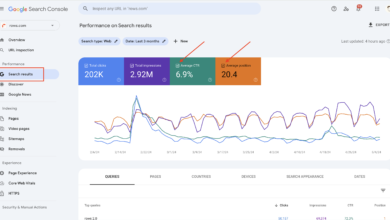
I recently pulled a Google Search Console report for a client and saw something that stopped me in my tracks. Their impressions were up significantly year-over-year, but their clicks were essentially flat. Ten years ago, that would have been a red flag for a bad meta description. Today, it’s just the reality of the search engine results page (SERP).
The user found what they needed without ever visiting the website.
This is the new baseline. Pages don’t just compete with other websites anymore; they compete with Google’s own interface. Between featured snippets, local packs, video carousels, and the rapidly expanding AI Overviews, the organic blue links we used to obsess over are being pushed further down the page. In my experience, if you aren’t optimizing specifically for these features, you are invisible to a huge segment of your audience—even if you technically rank on page one.
The good news? You can design content to win these spots. It’s not magic, and it doesn’t require a Ph.D. in computer science. It requires a visibility-first mindset. In this guide, I’m going to share the exact workflow I use to diagnose SERPs and structure content that earns snippets, maps placements, and AI citations.
Quick definition: what counts as a SERP feature (and why it changes SEO)

When I talk about SERP features, I’m referring to any result on a Google search page that isn’t a standard organic listing. These modules are designed to provide immediate answers or rich utility.
- Featured Snippets: The box at the top of the results (often called “Position Zero”) that pulls a direct answer from a webpage.
- People Also Ask (PAA): The expandable accordion of related questions.
- Local Pack (Map Pack): The map and list of three businesses that appear for location-based queries.
- AI Overviews: Generative AI summaries that synthesize an answer from multiple sources (often pushing everything else down).
- Knowledge Panels: Information boxes about entities (brands, people, places) usually powered by the Knowledge Graph.
Why businesses should optimize for SERP features (snippets, maps, and AI boxes)

I often hear business owners ask, “If zero-click searches are rising, why should I bother?” It’s a fair question. But the data suggests that if you ignore these features, you aren’t just losing clicks; you’re losing brand relevance.
According to recent market data, zero-click searches accounted for roughly 58.5% of U.S. Google search sessions in 2024 . Furthermore, AI Overviews are now appearing in approximately 15% of search results . The shift is undeniable. If your content isn’t structured to be cited in these features, users might never see your brand name at all.
Here is how I break down the landscape shift for stakeholders:
| Change in Search | What Users See | What It Means for My Content |
|---|---|---|
| Rise of Zero-Click | Immediate answers (weather, definitions, simple steps) directly on the SERP. | I must optimize for brand impressions and “assisted conversions” rather than just direct traffic. |
| AI Overviews | Synthesized paragraphs citing multiple sources at the very top. | My content must be structured clearly enough for machines to parse and cite as a trusted source. |
| Visual & Local Dominance | Maps, images, and video carousels taking up the “above the fold” space. | I need diverse assets (images, schema, structured lists) to be eligible for these slots. |
From clicks to visibility: what “winning” looks like now
We have to redefine success. Winning used to mean a click to your homepage. Now, winning might mean your brand name appears as the source in an AI Overview, or your phone number is dialed directly from the Local Pack.
For example, if I run a dentist office in Austin, a user might search “emergency dentist near me,” see my reviews and phone number in the Map Pack, and call immediately. My website traffic stats show zero sessions, but my receptionist is booking an appointment. That is a SERP feature win.
Where SERP features usually appear (informational vs local vs commercial intent)
Not every query triggers every feature. I look for specific patterns to know what to target:
- Informational (“What is”, “How to”): Triggers Featured Snippets, PAA, and AI Overviews.
- Local (“Near me”, “in [City]”): Triggers Map Packs and Local Services Ads.
- Commercial Investigation (“Best”, “Vs”): Triggers review stars, shopping carousels, and comparison tables.
My visibility-first workflow to optimize for SERP features (step-by-step)

Optimizing for these features requires a deliberate workflow. You can’t just write a blog post and hope for the best. I treat this as a structural engineering task as much as a writing task.
When I’m planning content—often using tools like Kalema’s AI article generator to assist with outlining and intent mapping—I follow this exact sequence to ensure the output is ready for the SERP.
| SERP Feature Target | Best Content Format | On-Page Structure | Schema to Consider |
|---|---|---|---|
| Featured Snippet | Direct Answer (40-60 words) | Question in H2, immediate answer in <p> | Article, FAQPage |
| List/Table Snippet | Bulleted List or Data Table | Descriptive H2 followed immediately by list/table | HowTo, Article |
| Local Pack | NAP + Service details | Footer address, embedded map, location page | LocalBusiness |
Step 1 — Diagnose the SERP: what feature is Google trying to satisfy?
Before writing a single word, I look at the live results for my target keyword. I spend about 15 minutes scanning the landscape. What is Google showing right now?
- Is there a Featured Snippet? If yes, Google wants a definition or a concise list.
- Is there a Map Pack? If yes, this is a local intent query; a blog post alone won’t rank.
- Are there forum discussions (Reddit/Quora)? If yes, users want authentic, first-hand experiences.
Step 2 — Pick one primary feature target per page (and a secondary one)
A common mistake I used to make was trying to target everything with one page. It rarely works. I now pick one primary target.
If I’m writing “How to fix a leaky faucet,” my primary target is the Video Carousel or How-to Snippet. My secondary target is PAA. I won’t waste time trying to force a Local Pack result unless I’m a plumber selling services in a specific city.
Step 3 — Structure content so machines can extract it (without writing for robots)
This is where intelligent planning pays off. I use Kalema’s SEO content generator capabilities to help build structured outlines that align with these targets. The goal is to make the content easy for Google’s bots to “scrape and present.”
My rule for definitions:
If the query is “What is [X]”, I write:
- H2: What is [X]?
- Paragraph 1: A direct, clear definition between 40–60 words. (This is the “snippet bait”).
- Rest of section: Deeper explanation, context, and nuance.
Step 4 — Add the right structured data (schema) where it genuinely applies
Think of schema markup like a seatbelt. It doesn’t make the car go faster (it’s not a direct ranking factor), but it makes the journey safer and ensures Google understands exactly who you are and what you offer.
I check for opportunities to add FAQPage schema (if I have real FAQs), HowTo schema (for step-by-step guides), or LocalBusiness schema. I always validate this using the Rich Results Test. Don’t spam schema—if you mark up content that isn’t visible on the page, you risk a manual penalty.
Featured snippets + People Also Ask: how I structure answers to get pulled into the SERP
Earning a featured snippet is often about formatting rather than just authority. I have seen lower-authority sites steal snippets from giants like Wikipedia simply because they answered the question more clearly.
Here is a real workflow I use. If I am targeting the query “What is programmatic SEO?”, I look at my current draft.
Before (Weak for Snippets):
“Programmatic SEO is a fascinating topic that many marketers are discussing. It involves using code to create pages. When we look at the history of search, we can see that automation has always been key…”
(Too fluffy. The answer is buried.)
After (Optimized for Snippets):
“Programmatic SEO is a method of publishing large volumes of landing pages at scale by using a database and templates. It allows businesses to target thousands of long-tail keywords without manually writing each page.”
(Direct. Definitive. Extractable.)
Snippet patterns to match: paragraph, list, table (and when each wins)
I look at the current snippet and copy the format, not the wording.
- Paragraphs: Best for “What is”, “Who is”, and “Why” questions.
- Lists (Bulleted or Numbered): Best for “How to”, “Best X of Y”, and recipes.
- Tables: Best for “Pricing”, “Comparison”, and “Specs”. Google loves pulling clean HTML tables.
People Also Ask: how I write mini-answers that expand into a cluster
People Also Ask boxes are gold mines for content expansion. I often take the top 3 PAA questions for my topic and answer them as H3s at the bottom of my article.
I keep the answers concise—around 30-50 words. This increases the likelihood that Google will pull that specific paragraph into the PAA box. If the answer requires more depth, I link out to a dedicated page, effectively using PAA to build a topic cluster.
Maps and the local pack: earning ‘near me’ visibility (even if I’m new to local SEO)

For service businesses, the Local Pack is the only SERP feature that matters. Ranking organically below the map is often a consolation prize. Optimizing for this requires a shift away from “content” and toward “entity presence.”
My Google Business Profile checklist (the non-negotiables)
If you don’t claim and optimize your Google Business Profile (GBP), you aren’t in the game. Here is my non-negotiable checklist:
- Primary Category: This is the biggest ranking factor. Ensure it matches exactly what you are (e.g., “HVAC Contractor” not just “Contractor”).
- Business Name: Use your real-world name. Don’t stuff keywords (e.g., don’t use “Best Plumber Chicago” if your LLC is “Smith Plumbing”).
- Service Area: Clearly define where you serve.
- Photos: Upload real photos of your team and trucks. Stock photos hurt trust.
- Reviews: You need a process to get them. I aim for a steady drip, not a sudden flood.
A common gotcha I see: businesses ignoring the Q&A section. I populate this myself with common customer questions to help signal relevance.
Location pages that support Maps (without doorway-page spam)
If you serve multiple cities, you need location pages. But be careful. Google hates “doorway pages”—identical pages where only the city name is swapped.
My rule is: One location page per real market, with unique content. I include details about local parking, specific services offered in that location (which might differ), testimonials from local clients, and an embedded map of that specific service area. This grounds the page in reality.
AI Overviews and AI boxes: how I optimize for citations with entity-first SEO

This is the frontier. AI Overviews (formerly SGE) don’t just copy-paste snippets; they synthesize information. To be cited here, you need to be seen as a trusted entity.
I think about this transition in terms of goals:
| Old Goal (Search) | New Goal (AI & Answer Engines) |
|---|---|
| Rank #1 and get the click. | Be referenced as a primary source. |
| Optimize for keywords. | Optimize for Entity Authority (E-E-A-T). |
| Lengthy, comprehensive guides. | Structured, factual data chunks. |
What are AI Overviews and why do they matter?
AI Overviews are AI-generated responses that appear at the top of the SERP for complex queries. They matter because they push organic results down and often satisfy the user’s intent immediately. If you aren’t cited in the overview, you are likely invisible to a large percentage of users, especially on mobile.
Entity-first indexing (in plain English): how search decides what’s “known”
Search engines are moving from matching strings (keywords) to understanding things (entities). They want to know that “Kalema” is a software company, that it offers an AI SEO tool, and that it is related to “Content Marketing.”
If I were starting from zero, I would prioritize building my entity signals before chasing volume. I would ensure my About page is robust, my authors have clear bios, and my brand is mentioned consistently across relevant industry sites. Consistency builds the “Knowledge Graph” confidence that gets you cited.
How I optimize for zero-click visibility (without pretending clicks don’t matter)
It can feel unfair to do all this work and not get the click. But I focus on “assisted conversions.” If a user sees my brand as the answer in an AI box, they might not click now, but they are more likely to search for my brand later.
I optimize for this by ensuring my brand name and logo are prominent in images and that my content provides unique value (like a proprietary calculator or data study) that the AI summary mentions but can’t fully replicate.
Why forums and UGC show up (and how I use it ethically)
You’ve likely noticed Reddit threads ranking higher than ever. Traffic to Reddit has increased nearly 40% year-over-year . Google is prioritizing “hidden gems” of human experience.
Do: Participate in industry forums transparently. Answer questions. Build a reputation.
Don’t: Astroturf. Don’t pay for fake Reddit posts. It’s obvious, and it destroys trust.
How I measure SERP feature wins: tracking, reporting, and iteration

The point of tracking isn’t to make pretty charts; it’s to make decisions. If I see impressions rising but clicks falling, I know I might be winning visibility in zero-click features.
Here is my weekly check-in routine:
- Check Query Filter: In Google Search Console, I filter by “Question” queries. Am I appearing?
- Manual Spot Check: I incognito search my top 5 keywords. Do I see my brand in the snippet or AI box?
- GBP Insights: Are “Direction Requests” or “Calls” going up?
My simple KPI set for beginners (so I don’t drown in data)
If you only track a few things, track these:
- Branded Search Volume: Is more of the world searching for you by name? (The ultimate trust signal).
- Non-Branded Impressions: Is your reach expanding?
- Local Actions: Calls and directions (for local businesses).
- Assisted Conversions: Conversions where organic search was a touchpoint, even if not the final click.
Common mistakes, FAQs, and my next-step plan
Optimizing for SERP features is a game of nuance. Here are the pitfalls I see most often.
Common mistakes (and what I do instead)
- Mistake: Targeting the snippet with long, winding paragraphs.
Fix: I rewrite the definition to be 40–60 words, placing the subject first (“X is a…”). - Mistake: Spamming FAQ schema on pages without questions.
Fix: I only use FAQ schema if the page literally has a Q&A section visible to users. - Mistake: Ignoring the “People Also Ask” box.
Fix: I use PAA questions as H2s or H3s in my content to naturally capture that traffic. - Mistake: Creating duplicate city pages for local SEO.
Fix: I create unique location pages that feature specific local staff, projects, and reviews. - Mistake: I’ve shipped this one before—optimizing for a snippet that doesn’t exist.
Fix: I always check the SERP first. If there is no snippet, I don’t break my content flow trying to force one.
FAQs (quick answers)
What are AI Overviews?
AI Overviews are generative summaries that appear at the top of Google search results, synthesizing answers from multiple sources. They aim to answer complex queries directly on the results page.
Should I still care about traditional SEO?
Absolutely. Traditional SEO provides the foundation (crawlability, keywords, structure) that allows you to be eligible for these advanced features. You can’t win the snippet if you aren’t on page one.
How do I optimize for zero-click searches?
Focus on brand visibility and entity authority. Ensure your content answers questions clearly so you are cited, and optimize your meta titles and favicons to build brand recognition even if the user doesn’t click.
3-bullet recap + what I’d do this week
If you take nothing else away, remember this:
- The SERP is no longer just a list of links; it’s a dashboard of answers.
- Structure beats length. Clear headings, lists, and definitions win snippets.
- You must build entity trust (brand signals) to survive the shift to AI search.
Your action plan for this week:
- Open Google Search Console and identify your top 5 pages by impressions.
- Search the keywords for those pages in incognito mode to see what features appear.
- Rewrite the intro of one article to include a clear, 50-word definition of the main topic.
- Validate your local presence by checking your Google Business Profile category and hours.
This is learnable. Start with one feature, optimize for it, and watch your visibility grow.