Introduction: Quantity vs. Intent (and why I don’t obsess over 10 keywords anymore)

I still remember the first time I thought I had “cracked” SEO. I had a page ranking for about 40 different keywords. The traffic graph looked beautiful—up and to the right. But when I checked the conversion data, my heart sank. Zero leads. Not one.
I had successfully optimized for volume, but I had completely failed on intent. I was attracting people looking for definitions, free templates, and DIY advice, while trying to sell them an enterprise service. That experience taught me the most important lesson in modern content strategy: ranking is vanity; conversion is sanity.
If you are staring at a spreadsheet of exported terms wondering whether to target one keyword or multiple keywords on a single page, you are asking the right question. The answer isn’t a simple “yes” or “no.” It’s about intent alignment.
In this article, I’m going to share the exact framework I use to make this decision. We’ll move past the hype and look at a practical, newsroom-grade workflow for mapping keywords to pages, structuring content for AI retrieval, and measuring success by business impact, not just clicks.
Is it better to target one keyword or multiple related keywords? The real answer is intent, not volume

Here is the short answer: You should target one primary keyword per page representing the core topic, but you must support it with multiple related keywords—provided they share the exact same user intent.
The old-school method of “focusing on just one keyword” is obsolete because Google understands semantic context. If you write a great article about “running shoes,” Google knows it’s also about “jogging sneakers” and “athletic footwear.” You don’t need a separate page for each synonym.
However, the trap many fall into is mixing intents. If you try to target “what is CRM” (informational) and “buy CRM software” (transactional) on the same page, you usually fail at both. The reader looking for a definition bounces when they see a pricing table, and the buyer bounces when they have to scroll through a history lesson.
My mental model is simple: One Page = One Job to Be Done.
One page, one intent: what ‘intent alignment’ means in plain English
Intent alignment is just a fancy way of asking: “Does every keyword on this list ask for the same answer?”
Think of it like walking into a hardware store. If you ask, “How do I fix a leaky faucet?” you want advice (Informational). If you ask, “Price of a Delta faucet cartridge,” you want a product shelf (Transactional). If a clerk tries to give you a history of plumbing when you just want to buy the part, you leave.
In SEO, mixing these intents on one URL confuses search engines and frustrates users. If your keyword list contains “best CRM for small business” and “CRM definition,” those are two separate pages. Period.
Table: Single-keyword focus vs keyword stuffing vs primary keyword + cluster (recommended)
To make this concrete, here is how the three common approaches compare in practice:
| Approach | What it looks like | The Risk | Expected Outcome |
|---|---|---|---|
| Strict Single Keyword | Writing solely for “email marketing software” and avoiding synonyms. | Missed traffic opportunities; content feels robotic and repetitive. | Limited visibility. You might rank for one term but lose out on the long-tail variations. |
| Keyword Stuffing (The “Kitchen Sink”) | Cramming “email tools,” “what is email,” “free templates,” and “buy software” into one post. | Confusing Google about the page’s purpose; high bounce rates. | The “Jack of all trades” failure. Rankings fluctuate wildly, and conversions are usually near zero. |
| Intent Cluster (Recommended) | Primary focus: “Best email software.” Secondary terms: “top rated email tools,” “email platforms comparison.” |
Requires careful planning to ensure intent doesn’t drift. | High Authority. You rank for the main term plus dozens of relevant variations, and the user gets exactly what they came for. |
What changed: AI-driven search, zero-click SERPs, and why keyword quantity matters less

The strategy of targeting multiple keywords used to be about catching as much traffic as possible. But the game has changed. We are moving toward an era of Answer Engine Optimization (AEO) and AI-driven search.
Consider the data: recent reports suggest that organic click-through rates for U.S. searches have dropped to approximately 40.3% . Meanwhile, AI Overviews are taking over the top of the SERP, jumping from appearing in 312 to 794 of the top 1,000 ‘what is’ queries by late 2025.
What does this mean for us? It means retrievability is now more important than just ranking. AI systems like ChatGPT or Google’s Gemini don’t just look for keywords; they look for definitive answers they can cite. If your page is a messy collection of 20 loosely related keywords, an AI struggles to extract a clear answer. If your page provides a structured, authoritative answer to a specific intent, you are far more likely to be the source needed.
Interestingly, businesses integrating Generative Engine Optimization (GEO) alongside traditional SEO have seen 3–8× higher conversion rates from AI-originated traffic. The traffic is lower volume, but the intent is incredibly high.
Why ‘one target keyword’ is really a proxy for ‘one clear promise’
I tell my team to stop thinking about a “target keyword” and start thinking about a “page promise.”
When you focus on one primary keyword, you are really making a promise to the reader. If the keyword is “enterprise SEO audit,” the promise is: “I will show you how to audit a massive site.” If you start tossing in keywords about ‘local SEO for bakeries’ just to capture volume, you break that promise.
Clarity converts. A page with a clear promise has a better H1, a punchier introduction, and a Call-to-Action (CTA) that actually makes sense.
What modern SEO systems reward: meaning, structure, and authority (not repetition)
Google’s algorithms have evolved from matching strings of text to understanding entities and relationships. They reward Topical Authority. This means proving you are an expert by covering a topic comprehensively across a cluster of pages, rather than stuffing everything into one giant guide.
Signals like EEAT (Experience, Expertise, Authoritativeness, and Trustworthiness) are amplified when your site structure is clean. When I see a site where every page has a distinct, non-overlapping purpose, I know they have a strategy. When I see pages cannibalizing each other for the same 10 keywords, I see a mess.
The Intent-First SEO Framework: how I decide whether to target one keyword or multiple keywords

This is the exact decision process I use. I don’t rely on gut feeling; I follow a workflow. You can use this for a single blog post or when planning a massive content hub.
Step 1: Start with the business outcome (not the keyword tool)
Before I even open a keyword tool, I ask: “What do I want the user to do?”
If you don’t define the outcome, you can’t define the intent. Here are common outcomes for U.S. businesses:
- Conversion (Transactional): “Book a demo,” “Add to cart,” “Get a quote.”
- Lead Gen (Commercial): “Download a checklist,” “Start a free trial.”
- Brand Awareness (Informational): “Read another article,” “Sign up for the newsletter.”
Step 2: Pick the primary keyword that matches the dominant SERP intent
Now, I look at the keywords. I pick the one that best aligns with that business outcome. This is where I ignore search volume. I would rather rank #1 for a term with 50 searches a month that leads to a demo request than #1 for a term with 5,000 searches that leads to a quick bounce.
The SERP Test: I type the potential primary keyword into Google and eyeball the results.
(Note: I do this in Incognito mode or using a tool to strip personalization.)
- Are the top results product pages? (Intent = Buy)
- Are they “Best of” lists? (Intent = Compare)
- Are they “What is” guides? (Intent = Learn)
If my goal is to sell services, but the SERP for my keyword is 100% informational Wikipedia-style articles, I have two choices: change my keyword or change my content format. I cannot force a sales page to rank in an informational SERP.
Step 3: Expand into an intent cluster (related terms that belong on the same page)
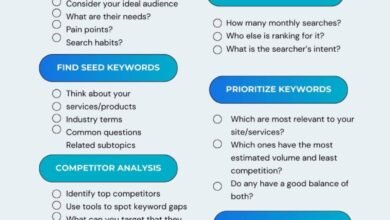
Once I have my Primary Keyword (the anchor), I look for the cluster terms. These are the supporting actors. I check:
- People Also Ask (PAA): Specific questions related to the primary intent.
- Competitor Headings: What sub-topics do the top-ranking pages cover?
- Internal Search Data: What are users typing into my own site search?
My Stop Rule: I stop expanding the cluster when a new keyword introduces a new “user problem.” If I’m writing about “accounting software features,” and I see “accounting software pricing,” I stop. Pricing is a different investigation; it often deserves its own page or a very distinct section.
Decision rule: when multiple keywords should become separate pages
If you are unsure whether to split a topic, follow these rules. Split the page if:
- The Audience Changes: (e.g., “Marketing for beginners” vs. “Advanced B2B marketing tactics”).
- The Format Changes: (e.g., “Best X Tools” is a listicle; “How to use X Tool” is a tutorial).
- The Funnel Stage Changes: (e.g., “What is a PEO?” is top-of-funnel; “PEO vs. Payroll provider” is middle-of-funnel).
Execution workflow: from one primary keyword to a page that ranks, earns citations, and converts

Once the strategy is set, the execution needs to be flawless. I see so many great strategies fail because of sloppy on-page work. Here is the order I follow so I don’t miss anything. This is especially useful if you are using an SEO content generator to speed up the drafting process while maintaining editorial control.
Checklist: Build the page around the promise (title, intro, H2s, CTA)
- Title Tag & H1: Must include the primary keyword and clearly state the benefit.
- Introduction (First 100 Words): Validate the user’s problem immediately. No fluff. Reiterate the “page promise.”
- Headings (H2s/H3s): Incorporate secondary cluster keywords naturally. These serve as signposts for skimmers.
- The “Meat”: Deliver the answer. Use bullet points and bold text for speed.
- CTA: Ensure the Call to Action matches the intent. (Don’t ask for a marriage proposal on the first date—if it’s an info post, ask for an email, not a sale.)
Table: On-page elements that reinforce intent (and what beginners should prioritize)
| Page Element | What to do | Why it helps |
|---|---|---|
| Title Tag | Front-load the primary keyword. Keep it under 60 chars. | Highest weight for ranking; determines the click. |
| H1 Header | Match the Title Tag but make it more human/conversational. | Confirms to the user (and AI) they landed in the right place. |
| Subheaders (H2/H3) | Use questions from ‘People Also Ask’ as headers. | Increases chance of ranking for long-tail queries and voice search. |
| Schema Markup | Add FAQ or HowTo schema. | Helps AI understand structure; wins rich snippets in SERPs. |
How to scale without chasing 10 keywords: clusters, internal links, and AI-assisted drafting (done responsibly)

Scaling content is hard. The temptation is always to use an Bulk article generator to pump out 100 pages targeting every keyword variation in existence. But remember: mass production of low-quality content is a liability, not an asset.
The sustainable way to scale is through Topic Clusters. Instead of trying to rank one page for 50 keywords, you create a ‘Pillar Page’ that targets the broad term, and then 5–10 ‘Supporting Pages’ that link back to it.
Using an AI article generator can be a massive advantage here, provided you use it for drafting and structure, not for final autopilot publishing. My rule is: AI builds the skeleton and the draft; a human adds the examples, the tone, and the accuracy check.
What a topic cluster looks like for a small US business (simple example map)
Let’s take a local HVAC company in Phoenix. Instead of one giant page trying to rank for everything, the cluster looks like this:
- Pillar Page (Broad Intent): “AC Repair Phoenix” (Primary Keyword)
- Supporting Page 1 (Specific Problem): “Why is my AC blowing warm air?”
- Supporting Page 2 (Comparison): “Trane vs. Carrier AC units for Arizona heat”
- Supporting Page 3 (Cost): “How much does a new AC unit cost in 2025?”
All the supporting pages link back to the Pillar Page. This signals to Google that you are the authority on “AC Repair in Phoenix,” without stuffing the main page with unrelated details about unit pricing.
AI visibility basics: formatting for citations (AEO/GEO) while still writing for humans
To get cited by AI (and to help human skimmers), use Answer-First Formatting. This means providing a direct, concise answer to a question immediately after the heading.
Bad example: “If you are wondering about the cost, there are many factors to consider…” (Rambling).
Good example: “The average cost of a new AC unit in Phoenix is between $5,000 and $8,000, depending on tonnage and SEER rating.” (Direct).
If I only had 30 minutes to optimize a page, I would go through every H2 and ensure the first sentence immediately following it answers the question directly.
Common mistakes when choosing keywords (and exactly how I fix them)

I’ve made every mistake in the book. Here are the most common ones I see in client audits, and how to fix them.
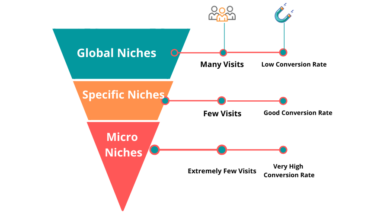
- Mistake: The Volume Trap. Choosing a keyword because it has 10,000 searches, even though it’s too broad.
The Fix: Niche down. Add a modifier. Swap “Project Management” for “Project Management for Creative Agencies.” - Mistake: Mixed Intent. Writing a “Guide to SEO” that tries to sell SEO services in the second paragraph.
The Fix: Move the sales pitch to the sidebar or footer. Keep the main content focused on helping, not selling. - Mistake: Accidental Cannibalization. Creating two blog posts: “How to write a blog” and “Blog writing tips.” They compete for the same spots.
The Fix: Merge them. 301 redirect the weaker one to the stronger one. - Mistake: Over-Optimization. Using the exact keyword 15 times in a 500-word post.
The Fix: Read it out loud. If you sound like a robot, delete half the keywords. Use synonyms naturally. - Mistake: Ignoring AI Overviews. Writing wall-of-text paragraphs that AI can’t parse.
The Fix: Use bullet points, numbered lists, and bold text for key definitions. - Mistake: Thin Content. Writing 300 words on a topic that requires 2,000 words to explain.
The Fix: Check the word count of the top 3 results. You don’t need to beat them by length, but you must match their depth. - Mistake: The Missing Call-to-Action. You get the traffic, but tell them to do nothing.
The Fix: Every page needs a “next step.” Even if it’s just reading a related article. - Mistake: Tracking Vanity Metrics. celebrating traffic spikes from irrelevant keywords.
The Fix: Measure conversions. High-intent keywords with 30–100 searches often convert at 15–60%. That is where the money is.
FAQs: Quick answers on targeting one keyword vs many (for beginners)
Is it better to target one keyword or multiple related keywords?
It is better to target one primary keyword and support it with multiple semantically related keywords that share the exact same user intent. Do not target multiple keywords if they require different answers or serve different stages of the buyer journey; split those into separate pages.
Do low-volume, high-intent keywords matter more than high-volume generic ones?
For most businesses, yes. A high-intent keyword (e.g., “emergency plumber near me”) may only get 50 searches but can convert at remarkably high rates. High-volume generic terms often bring traffic that merely browses and bounces. Revenue comes from intent, not just impressions.
How does AI-driven search change keyword strategy?
AI search prioritizes answers over links. This means your content needs to be structured clearly (using Schema, lists, and direct definitions) to be cited. It shifts the focus from simple keyword repetition to “retrievability”—making it easy for a machine to understand and extract your expertise.
Can focusing on one keyword hurt SEO?
Strictly focusing on a single keyword string without using natural variations can make your content feel unnatural and “thin.” It risks over-optimization penalties. However, the bigger risk is usually the opposite: trying to rank for too many unrelated things at once.
What should content creators prioritize now?
Prioritize Intent Alignment and Topical Authority. Build clusters of content that cover a subject deeply. Ensure your pages have excellent EEAT signals (real expertise) and use structured formatting to win in both traditional SERPs and AI overviews.
Conclusion: My 3-bullet recap + next actions to implement this week
If you take nothing else away from this, remember these three rules:
- One Page, One Intent: Never mix informational and transactional goals on the same URL.
- Volume is Secondary: A specific promise to a specific user is worth more than generic traffic.
- Structure Wins: Clean, organized content beats chaotic keyword stuffing every time in the age of AI.
If I were starting today with a messy keyword list, here is exactly what I would do this week:
- Audit your top 5 pages: Do they have a clear primary keyword, or are they trying to do too much?
- Run a SERP check: Type your target keywords into Google. If the results look different than your content, rewrite or restructure.
- Create one intent cluster: Pick a topic, write a pillar page, and plan 3 supporting articles.
- Fix your formatting: Add an FAQ section with Schema markup to your most important page to boost AI visibility.
SEO isn’t magic; it’s just clear communication at scale. Good luck.