The Specialized Expert: Why Hire a Technical SEO Consultant in 2026
Introduction: I used to think “SEO is keywords”—2026 proved me wrong

I learned this the hard way during a site migration in early 2024. We had the keywords, the backlinks, and the content. But traffic didn’t follow the migration. It wasn’t a penalty; it was a technical disconnect. The new JavaScript framework we used was rendering content beautifully for users but serving blank pages to crawlers. That experience shifted my perspective entirely.
For US business owners and growth leads, the stakes have only gotten higher. In 2026, “ranking” isn’t the only outcome that matters. With the rise of AI Overviews, answer engines, and zero-click behaviors, visibility has become far more complex. It is no longer just about being on page one; it’s about being cited, attributed, and retrievable by AI.
This guide isn’t about hype. It is a practical explanation of what a technical SEO consultant actually does in this new landscape, how they connect technical stability to AI visibility (AEO/GEO), and how to decide if your business needs that level of expertise right now.
Why hire a technical SEO consultant in 2026: AI search, zero‑click results, and higher technical risk

Here is how I’d explain the current situation to a non-SEO coworker: Imagine you have the best product in the store, but the aisle is dark, and the shelf is locked. That is your website without technical SEO. Now, add a personal shopper (AI) who grabs products for customers without them ever walking down the aisle. If that shopper can’t read your label instantly, you don’t get chosen.
In 2026, technical SEO is risk management combined with growth enablement. It ensures your infrastructure allows search engines and AI systems to access, understand, and credit your content.
What changes for a business when answers replace clicks:
- Traffic Volume vs. Quality: You might see fewer sessions, but higher intent.
- Attribution shifts: You need to track citations and “share of AI voice,” not just blue-link clicks.
- Technical barriers rise: If an AI bot hits a slow load or a rendering error, it moves on immediately.
Recent data underscores this shift. By 2025, AI-generated summaries appeared in over 50% of U.S. search results . Furthermore, approximately 60% of searches are now zero-click , meaning the user gets their answer without visiting a site. If your technical foundation—crawlability, speed, schema—isn’t solid, you are invisible in both traditional and AI search.
I recently audited a local service site that was losing leads despite great content. The issue? Their “Book Now” page wasn’t being indexed due to a parameter error. A technical fix restored their pipeline in two weeks. That is the difference a consultant makes.
What changed since “classic SEO” (rankings still matter, but they’re not the only scoreboard)

Think of it this way: Ranking is being on the shelf; AI citation is being the product the clerk recommends.
Classic SEO (2020–2023) was largely about optimizing for a list of blue links. Today, we deal with two new concepts:
- AEO (Answer Engine Optimization): Optimizing content to be the direct answer for AI assistants like ChatGPT or Siri.
- GEO (Generative Engine Optimization): Formatting data so generative engines can easily synthesize it into a summary.
Community signals and user-generated content (UGC) also play a massive role now. If your technical setup blocks crawlers from seeing your reviews or forum discussions, you lose a critical trust signal.
The real ROI: technical fixes that protect revenue and unlock new visibility

Hiring a consultant isn’t just about fixing error codes; it’s about revenue-adjacent impact. When I work on technical health, I’m looking for friction points that cost money.
Common revenue impacts of technical SEO:
- Checkout Speed: Improvements in Core Web Vitals (CWV) often correlate directly with lower cart abandonment.
- Lead Form Completion: Fixing JavaScript errors ensures forms actually submit on all devices.
- Discoverability: Ensuring high-margin product pages aren’t orphaned (unlinked) in the site architecture.
For example, improving Core Web Vitals (specifically LCP) has been shown to reduce bounce rates and improve conversion efficiency by 10–30% in some cases . That is ROI you can show to a CFO.
Is optimizing for AI search replacing traditional SEO? (No—here’s how they fit together)
I hear this fear often: “Why bother with SEO if AI is taking over?” The answer is simple: AI systems rely on technical SEO.
If Google or an LLM cannot crawl your site, render your JavaScript, or understand your schema markup, they cannot use your content to generate an answer. Technical SEO is the foundation; AEO and GEO are the layers on top. You cannot have the penthouse without the concrete slab.
What a technical SEO consultant does in 2026 (it’s more than “fixing errors”)

When I evaluate a site, I start with the plumbing, but I end with the user experience. It’s not just about meta tags anymore. The modern scope includes log file analysis, JavaScript rendering, internationalization, and defining an “AI-citable” content structure.
| Consultant Responsibility | What It Affects | What I’d Measure |
|---|---|---|
| Log File Analysis | Crawl efficiency; seeing how bots actually travel your site. | Crawl frequency on money pages vs. waste on low-value URLs. |
| Rendering Checks | Whether content exists for the bot or only the user. | Difference between “raw HTML” and “rendered HTML” word counts. |
| Schema Implementation | Rich results and entity understanding for AI. | Validity in Rich Results Test; AI citation frequency. |
| Migration QA | Preventing traffic loss during redesigns. | Traffic retention post-launch; 404 error spikes. |
Crawlability & indexability: making sure the right pages are eligible to show up
You can’t rank content that search engines can’t find. “Index bloat” is a silent killer I see often—where thousands of low-quality pages (like filter results) dilute the authority of your main pages.
Top 7 verification points:
- Robots.txt: Is it accidentally blocking key resources?
- Meta Robots Tags: Are we `noindex`-ing the right things?
- Canonical Tags: Do they point to the correct primary version?
- XML Sitemaps: Are they clean, or full of 404s and redirects?
- Orphan Pages: Are pages existing without internal links?
- Parameter Handling: Is `?sort=price` creating 50 duplicate URLs?
- Server Errors: Are 5xx errors wasting crawl budget?
Rendering & JavaScript SEO: what happens when Google (or an AI crawler) can’t see your content
If your content appears only after a user clicks or scrolls, a crawler might miss it entirely. The pipeline looks like this: Request → Render → Index → Retrieve. If the “Render” step fails (because of client-side JavaScript reliance), the indexing never happens.
I often find that what a developer sees in their browser is completely different from what the Googlebot sees. A technical consultant uses tools to inspect the rendered DOM (Document Object Model) to ensure your text, links, and products are actually visible to the machine.
Performance & Core Web Vitals: speed is UX, but it’s also visibility

Speed isn’t just about passing a test; it’s about respecting the user’s time. In the US, mobile networks can still be spotty during a commute. If your site takes 5 seconds to load, that user is gone.
Common Technical Wins:
- Before: 4MB of uncompressed images. After: Next-gen formats (WebP) + lazy loading.
- Before: Third-party chat widgets blocking the main thread. After: Deferring non-essential scripts.
- Before: Layout shifts when ads load (CLS). After: Reserved space for dynamic elements.
Structured data + entity clarity: helping machines understand and cite you
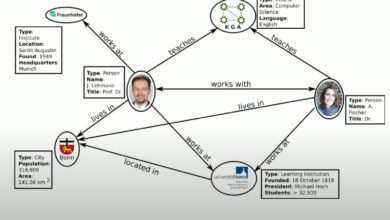
If I could fix only one thing for AI retrieval, it would be structured data (Schema). This is code that tells the engine, “This is a Product,” “This is a Review,” or “This is an Author.”
But it goes beyond code. It’s about answer-first formatting. Writing clear definitions and summaries at the top of your content makes it infinitely easier for AI models to extract and cite your information as the definitive answer.
The AI‑ready technical SEO workflow I’d expect a consultant to run (step‑by‑step)
Here is the workflow I use. If you are hiring someone, this is the level of operational detail you should expect. This process bridges the gap between traditional technical health and modern AI readiness.
Sometimes, executing this workflow requires scaling content production. While a consultant sets the strategy, tools like the AI article generator can help draft the structured, answer-first briefs required for this strategy at scale, which your editorial team then refines.
Step 1: Align on outcomes (not tasks) + define what ‘visibility’ means in 2026
We don’t start with “fix 404s.” We start with “Increase demo bookings in Texas.” I define success by inputs (changes we make) and outputs (results we see).
- Inputs: Schema deployment, Core Web Vitals fixes, content restructuring.
- Outputs: Organic traffic, conversion rate, and AI visibility metrics (citations).
Step 2: Crawl + log analysis to see what bots actually do
Crawls show what *could* be discovered; logs show what *is* happening. I ask for server logs to see if Googlebot is spending 80% of its time crawling useless calendar pages instead of your products. This “crawl waste” is a massive hidden issue for mid-sized sites.
Step 3: Fix indexation hygiene (canonicalization, noindex, sitemaps, parameters)
Before we build, we clean. A prioritized checklist typically looks like this:
- Immediate: Fix broken internal links to money pages.
- Immediate: Resolve canonical loops.
- Engineering Ticket: Implement logic to handle URL parameters for facets/filters.
Step 4: Rendering & templating review (especially for JS-heavy sites)
I look for sitewide patterns before I chase one-off errors. If the product page template relies on JavaScript to load the description, that is a P0 (Priority Zero) issue. I validate this by comparing the source code against the rendered HTML.
Step 5: Core Web Vitals plan (prioritize what moves conversions)
| Template Type | Likely CWV Issue | Fix Example |
|---|---|---|
| Homepage | LCP (Large Contentful Paint) – Hero Image | Preload the hero image; remove lazy load from above-fold assets. |
| Blog Post | CLS (Cumulative Layout Shift) – Ads/Images | Set explicit width/height dimensions on all media. |
| Product Page | INP (Interaction to Next Paint) – heavy JS | Debounce input handlers; reduce main-thread work. |
Step 6: Make content ‘retrieval-ready’ (structure, schema, and answer-first formatting)
This is where AEO meets technical SEO. I recommend a specific “AI-citable” layout for key sections:
- The Heading: A clear question (e.g., “What is technical SEO?”).
- The Summary: A 40–60 word direct answer immediately following.
- The Details: Bullet points expanding on the summary.
- The Schema: Wrapping this section in `FAQPage` or `Article` schema.
Step 7: Ship safely: QA, change logs, and rollback plans
Most SEO damage I see comes from untested releases. My release checklist always includes:
- Staging environment check (is `noindex` removed?).
- Redirect mapping verification (did the old URLs redirect to new ones?).
- Canonical tag verification.
- Robots.txt validation.
- Post-launch “smoke test” crawl immediately after release.
Step 8: Reporting that includes AI visibility (beyond rankings and clicks)
Don’t get dazzled by vanity dashboards. A good report tells you what to do next. In 2026, I track:
- Traditional: Clicks, Impressions, CTR, Index Coverage status.
- New AI Metrics: Share of AI Voice (how often you are cited in AI answers for key terms) and Source Attribution Rate .
When to hire a technical SEO consultant: a beginner-friendly decision checklist
If I were in your shoes, I’d hire help when the risk of doing it wrong exceeds the cost of the expert. You generally have three options: rely on an AI SEO tool for basic guidance, hire an agency for full execution, or bring in a specialized consultant for strategy and oversight.
| Option | Best For | Pros/Cons |
|---|---|---|
| DIY / AI Tools | Small blogs, simple CMS setups. | Low cost, but lacks strategic nuance for complex issues. |
| Agency | Hands-off execution needed. | Full team, but can be expensive and slow to pivot. |
| Consultant | Specific problems (migrations, audits, strategy). | High expertise/impact, requires internal team to implement. |
Naturally, using an SEO content generator can help you maintain velocity, but a consultant ensures that content sits on a stable technical foundation.
Hire now vs wait: the 10-question self-assessment
Be honest—this is just for you. If you answer “Yes” to 3 or more, consider hiring.
- Are we planning a site migration or redesign soon?
- Has our organic traffic flatlined or dropped for no clear reason?
- Do we rely on organic search for significant revenue/leads?
- Are key pages missing from Google’s index?
- Does our developer team lack specific SEO knowledge?
- Is our site built on a heavy JavaScript framework (React, Angular, Vue)?
- Are we expanding internationally (multiple languages/regions)?
- Do we have thousands of URLs (ecommerce/listings)?
- Are our Core Web Vitals scores consistently “Poor”?
- Are competitors appearing in AI Overviews while we are not?
What I’d look for in a consultant (proof, process, and communication)
Here are the questions I’d ask on the first call:
- “Can you show me an example of a technical recommendation you made that was actually implemented?”
- “How do you communicate with developers? Do you write tickets?”
- “How do you measure success beyond keyword rankings?”
Red Flags: Anyone guaranteeing #1 rankings, refusing to share their audit process, or focusing solely on link building without looking at your site structure.
Common mistakes I see when hiring a technical SEO consultant (and how to avoid them)
I’ve made versions of these mistakes in the past, or I’ve been hired to fix them. Here is how to avoid the trap.
Mistake #1–#3: Paying for an audit that can’t be implemented
1. No Dev Alignment: You hire a consultant, but your dev team has zero sprint capacity. Fix: Secure engineering budget before the audit starts.
2. PDF dumps: Receiving a 100-page PDF that no one reads. Fix: Demand ticket-ready recommendations (Jira/Asana) with acceptance criteria.
3. No Prioritization: Treating a missing alt tag the same as a blocked homepage. Fix: Ask for an “Effort vs. Impact” matrix.
Mistake #4–#6: Optimizing the wrong things (or doing them in the wrong order)
4. Chasing Scores vs. Metrics: obsessing over a 100/100 speed score instead of fixing the checkout flow. Fix: Focus on field data (RUM) and conversions.
5. Schema Spam: Adding unrelated schema hoping for a boost. Fix: Stick to accurate, valid schema that describes your actual content.
6. Migration Chaos: Calling the SEO consultant after the launch. Fix: Involve SEO in the wireframe stage.
Mistake #7–#8: Measuring the past and ignoring architecture
7. Ignoring Architecture: Focusing on individual pages while the site structure is a mess. Fix: Prioritize internal linking, breadcrumbs, and hub pages.
8. Legacy Metrics: Only tracking blue links in an AI world. Fix: I’d rather know my “share of AI voice” than my average position for a generic term.
FAQ: Hiring a technical SEO consultant in 2026
Why is hiring a technical SEO consultant still necessary in 2026?
Because AI engines need a technical bridge to access your content. While AI changes how users search, a consultant ensures your infrastructure—speed, rendering, and structure—allows those AI systems to read and cite your site. Without this foundation, you are invisible to both bots and humans.
What does a technical SEO consultant do today that’s different from traditional roles?
Traditionally, the focus was on keywords and metadata. Now, responsibilities include JavaScript rendering analysis, implementing complex schema for entity clarity, and advising on “answer-first” content formatting. It is about technical eligibility for AI retrieval, not just ranking positions.
How can I measure success beyond traditional rankings and clicks?
You should track AI visibility metrics like “generative appearance score” and “AI citations,” alongside traditional conversions. I recommend starting with Source Attribution Rate—how often your site is linked as a source in AI summaries—while keeping a close eye on technical health scores.
Is optimizing for AI search replacing traditional SEO?
No, they are complementary. Think of technical SEO as the roads and highways (infrastructure), while AEO/GEO are the signs that direct traffic. You need the roads to be drivable (technical SEO) before the signs (AI optimization) can work effectively.
Conclusion: the 2026 playbook (what I’d do next)

The game has changed, but the goal remains the same: visibility that drives business. To recap:
- The Shift: Search is moving from clicks to answers; technical excellence is your ticket to being cited.
- The Role: Consultants now bridge the gap between engineering stability and AI retrievability.
- The Decision: Hire when the technical risk (migrations, JS frameworks) outweighs the cost of expertise.
If you only do one thing this week, check if your money pages are actually being indexed. Here are your next steps:
- Run a “site:yourdomain.com” search to check for obvious index bloat or missing pages.
- Check your Core Web Vitals in Google Search Console for your top templates.
- Map out any upcoming site changes or migrations on a calendar.
- Audit your basic schema implementation on key product/service pages.
- If you see red flags, schedule a discovery call with a technical consultant to define the scope.